Powered By Blogger
Showing posts with label Banking. Show all posts

Tuesday, 1 February 2022

UBS Warns of Crypto Winter Amid Expectation of Fed Rate Hikes and Regulation

UBS, Switzerland’s largest bank, has warned about a crypto winter where prices crash and may not recover for years. The bank’s analysts explained several major reasons affecting the prices of cryptocurrencies.

UBS Expects Crypto Winter That Could Last Years

Switzerland’s largest bank, UBS, has warned of a crypto winter where prices crash and may not recover for years. The bank’s analysts, led by James Malcolm, recently explained in a note to clients several reasons why cryptocurrency may lose its attractiveness to investors this year.

Firstly, the UBS analysts detailed that the Federal Reserve’s interest rate hikes are set to reduce the appeal of cryptocurrencies, such as bitcoin, for many investors who see the asset class as a good alternative store of value.

The analysts added that if central banks move to get a handle on inflation, investors may not be holding bitcoin as protection against rising prices. They noted that government stimulus was a key factor boosting the prices of cryptocurrencies in 2020 and 2021.

The Fed is expected to raise interest rates several times this year. JPMorgan CEO Jamie Dimon recently said that the Federal Reserve might have to raise short-term interest rates more than four times this year. Goldman Sachs similarly expects the Fed to raise interest rates four times this year. Wharton’s finance professor Jeremy Siegel said earlier this month, “The Fed is going to have to hike many more times than what the market expects.”

The UBS analysts also claimed that some investors are increasingly realizing that bitcoin is not “better money” because of its high volatility. In addition, they said the cryptocurrency’s limited supply makes it inflexible as a currency. The analysts further stated that blockchain technology is hard to scale because of its decentralized design.

Another major hurdle for cryptocurrency is regulation, the UBS team described. Widespread cryptocurrency speculation “inevitably invites closer oversight to guard consumers” and “protect financial stability,” the analysts warned. They elaborated, “high-flying stablecoins and defi [decentralized finance] projects seem almost sure to face bigger setbacks from authorities in the coming months.”

In the U.S., the Biden administration is reportedly drafting a government-wide strategy for crypto assets. Furthermore, the chairman of the U.S. Securities and Exchange Commission (SEC), Gary Gensler, said last week that regulating crypto exchanges is a top priority for the SEC.

What do you think about the warning by UBS? Let us know in the comments section below.

Friday, 30 July 2021

RIPPLE’S XRP LOSING COMPETITIVE ADVANTAGE: BIS AND SWIFT GOING REAL-TIME


Nexus is a model for connecting multiple national payment systems into a cross-border platform that could enable international payments to happen as quickly as sending a text message.

The Bank for International Settlements (BIS) has partnered with the Monetary Authority of Singapore, the country’s financial supervisory authority, to publish a blueprint for the multilateral linking of domestic real-time payment systems across borders.

Building on the bilateral linkage between Singapore’s PayNow and Thailand’s PromptPay launched in April 2021, the blueprint also leverages the experience of the National Payments Corporation of India’s (NPCI) development and operation of the Unified Payments Interface (UPI) system.

The blueprint is titled Project Nexus (link to .pdf) and envisages the creation of ‘Nexus Gateways’ that serve to coordinate compliance, foreign exchange conversion, message translation, and the sequencing of payments among all participants.

An overarching Nexus Scheme sets out the governance framework and rulebook for participating retail payment systems, banks, and payment service providers to coordinate and effect cross-border payments through the network.

Benoît Cœuré, head of the BIS Innovation Hub, commented: “Project Nexus is trying to achieve the equivalent of internet protocols for payments systems. That means creating a model through which any country can join by adopting certain technical and governance requirements.”

Project Nexus requires participating countries to adopt the protocols once to gain access to the broader cross-border payments network. Countries won’t have to negotiate payment linkages with each jurisdiction on a bilateral basis.

Andrew McCormack, head of the BIS Innovation Hub Singapore Centre, said: “Country-to-country and regional payment connections already exist. But they require significant coordination efforts, which increase exponentially with more participants. Three countries require three bilateral links but 20 countries would require 190 bilateral links.”

Nexus is a model for connecting multiple national payment systems into a cross-border platform that could enable international payments to happen as quickly as sending a text message, the Bank for International Settlements announced.

BIS proposes to connect national systems internationally to improve speed, cost, and transparency of cross-border payments, which basically sums up the mission of blockchain firms such as XRP-powered Ripple, ex-Ripple founder Jed McCaleb’s Stellar (XLM), and newly launched Algorand-powered Six Clovers.

SWIFT has just announced cross-border payments in a matter of seconds with its new messaging product SWIFT Go, which is complementary to cross-border settlement services such as BIS’ Project Nexus and Ripple’s On-Demand Liquidity.

Yesterday, Ripple announced the go-live of its On-Demand Liquidity in Japan, thus setting the stage to drive more adoption of crypto-enabled services in the Asia Pacific.

The news further proves the utility of the XRP Ledger in a turbulent period for Ripple Labs due to the ongoing lawsuit with the SEC, which claims XRP to be a security for its “decentralized nature“.

SEC Commissioner Hester Peirce has recently come forth to clarify that the agency could file complaints against firms for unregistered security offerings even if said instrument is not a security in the eyes of the SEC.

The same Commissioner has released a public statement together with SEC Commissioner Elad Roisman – “a gift from the heavens” – admitting to the lack of clarity within the digital asset space, further contributing to Ripple’s claim that it had no fair notice that XRP could be deemed a security.

Ripple’s Fair Notice defense is believed to be a threat to the SEC’s future enforcement actions against the crypto ecosystem. The agency itself warned the Court that a Ripple win on Fair Notice would nullify the Howie Test.

In June, BIS opened an Innovation Hub in London to push for digital currencies. Later that month, the institution praised CBDCs against Bitcoin, while adding that stablecoins are no game-changer as they have the potential to fragment the liquidity of the monetary system. 

Thursday, 8 July 2021

Bank of Jamaica to begin digital currency pilot in August


The Bank of Jamaica is getting ready to begin testing its planned central bank digital currency in collaboration with financial institutions in the country


Jamaica’s central bank will reportedly commence the initial roll-out of its central bank digital currency (CBDC) project in August.

According to a report by the Jamaica Observer on Wednesday, Bank of Jamaica (BOJ) Governor Richard Byles made this known during a Rotary Club event earlier in July.

Detailing plans to begin the pilot phase in August, Byles revealed that the BOJ was currently working on the technical aspects of the CBDC within a sandbox environment.

As previously reported by Cointelegraph, the BOJ chose Irish technology firm eCurrency Mint as the tech provider for its national digital currency project back in March. The Ireland-based cryptography security company was chosen from a list of solution providers that began applying for the project back in July 2020.

“As we work through the technical minting of the currency, we have to test it rigorously as a pilot that we’ll do in August,” Byles stated, adding:

“In September to December we’ll be recruiting more of the banks to come on board and then we’ll gradually expand the pilot out into a full-fledged launch of the CBDC.”

The BOJ governor also provided more details about the planned CBDC, stating that financial institutions will serve as intermediaries between the central bank and consumers — both retail and corporate.

With the CBDC designed to complement Jamaica’s banknotes, financial institutions will be able to issue the digital currency to individual and business account holders at a rate of one CBDC “coin” to one Jamaican dollar.

Byles also stated the BOJ’s plan to use the CBDC as a platform to provide financial services to the unbanked population. In this regard, the central bank governor called on the assistance of telecom firms in the country as well as their significant network of retail payment merchants.

Related: Jamaica's central bank taps Irish tech outfit for CBDC project

CBDC efforts have become a global endeavor, with central banks across the world establishing pilot studies or even launching sovereign digital currencies. A fellow Caribbean nation, the Bahamas, became one of the first countries to float a CBDC back in October 2020.

Elsewhere in the Caribbean, the Eastern Caribbean Currency Union recently launched its DCash digital currency in four or the currency union’s eight member states.

Wednesday, 7 July 2021

Report: Fintech's Growing Popularity a Threat to Profitability of Nigerian Banks


Financial technology companies (fintechs) are now among the biggest threats to the overall profitability of Nigerian banks, analysts from the country’s Coronation Merchant Bank (CMB) have warned.

The Efficiency of Fintech

As a report carried by local media explains, this threat from fintech services stems from their growing popularity with “tech-literate” customers. According to CMB analysts, such customers prefer using the more efficient services offered by fintechs to visiting physical branches of conventional banks.

Although Nigerian conventional banks are “apparently not concerned” about this threat, the media report, however, quotes Guy Czartoryski, head of research at CMB, explaining why the findings of his bank’s study must be taken seriously. Using internet banks such as Kuda, Carbon and Rubies as examples of fintech services that pose a threat to banks, Czartoryski explained:

These banking platforms are attractive to millennials and other tech-literate customers and require little or no physical banking presence. The obvious advantage they have over conventional commercial banks is low cost.

Banks Already Competing With Fintechs

Meanwhile, the same report also quotes Czartoryski explaining why banks are seemingly indifferent to this threat. According to Czartoryski, banks are not overly concerned because they “see themselves as partners with internet banks, offering customers cash withdrawals and supplying them with clearing service.”

In addition, conventional banks “also offer their own USSD-based offerings.” This, therefore, suggests that conventional banks are competing with internet banks in some areas. Still, Czartoryski concludes that only “time will tell whether the conventional banks are justified in their confidence, or merely complacent.”

Do you agree that fintechs are a threat to the long-term profitability of Nigerian banks? Tell us what you think in the comments section below.

Tuesday, 6 July 2021

UBS Advises 'Stay Clear' of Cryptocurrencies — Warns 'Regulators Will Crack Down on Crypto'


Switzerland’s largest bank, UBS, has advised investors to “stay clear” of cryptocurrencies and “build their portfolio around less risky assets.” The UBS analysts warned that “Regulators have demonstrated they can and will crack down on crypto.”

UBS’ Crypto Advice and Warning

The global wealth management team at UBS warned in a note published last week that regulators worldwide, particularly the U.S. and the U.K., will impose tougher cryptocurrency regulations. Citing that “China’s latest crackdown — extending to miners, banks, e-payment networks, and social media — hurt crypto prices and operators,” the UBS analysts wrote:

Regulators have demonstrated they can and will crack down on crypto … So we suggest investors stay clear, and build their portfolio around less risky assets.

“We’ve long warned that shifting investor sentiment or regulatory crackdowns could pop bubble-like crypto markets,” the analysts added. “We think investors should avoid crypto speculation, and consider risk-adjusted returns before buying alternative assets.”

The bank pointed out that a number of regulators worldwide have begun tightening their oversight of the crypto market. Recently, China has been cracking down on bitcoin mining and payments. Canada’s regulator has sent notices to crypto exchanges and the regulators in Japan, the U.K., Cayman Islands, and Thailand have targeted global crypto exchange Binance.

The U.K. has imposed tight registration requirements on crypto exchanges, causing 64 firms to withdraw their applications to register. In South Korea, most small exchanges are at risk of having to shut down operations due to strict regulatory and banking requirements.

The UBS analysts further described: “Crypto trading practices, such as extending 50x or 100x leverage, appear fundamentally at odds with mainstream finance regulation.” They warned:

While we can’t rule out future price gains in cryptos, we see this as a speculative market that poses significant risks to professional investors.

The bank, however, reportedly recognizes that some clients want exposure to cryptocurrency, particularly bitcoin, and is rumored to be considering offering crypto services to wealthy clients. A growing number of investment banks are already doing so, including Goldman SachsMorgan StanleyCitigroupStandard Chartered, and DBS.

What do you think about UBS’ crypto advice and warning? Let us know in the comments section below.

Barclays Blocks Customers From Sending Funds to Binance


Barclays has reported it no longer supports wiring funds to Binance, one of the largest cryptocurrency exchanges in terms of daily volume. The bank announced its issues with wiring funds to Binance in a resolution message to the customers today. The banking giant cites the warning that the Financial Conduct Authority (FCA) issued against Binance last week. The measure affects more than 24 million Barclays customers at a worldwide level.

Barclays Blocks Wires To Binance

Barclays, one of the leading banking institutions in the UK, announced they would no longer support wiring funds to Binance. The bank made this announcement effective immediately and told customers it was meant to protect their money. Barclays based this measure on the warning that the FCA issued last week on the cryptocurrency exchange. The bank stated:

This action does not impact on the ability for customers to withdraw funds from Binance. The decision has been taken following the FCA warning to consumers.

Last week, the FCA stated Binance Markets Limited “is not permitted to undertake any regulated activity in the UK.” As a result of this, many institutions are studying which will be the best resolution on this subject. However, Barclays is not the first bank that has acted directly by blocking payments to crypto trading platforms. Last month, Natwest also established a limit on daily transfers to cryptocurrency exchanges. This due to the alleged fraud numbers associated with these operations. TSB, another UK bank, said it would be studying to exert similar measures.

The recent measure taken by Barclays would affect more than 24 million customers worldwide. These customers are now unable to move their funds to Binance to buy cryptocurrencies. While the company has no offices in the UK, it uses a series of payment processors to route fiat money from its customers to its platform. Reports note that these affiliates would not be able to process these payments now.

Binance Under Scrutiny

Binance has been under scrutiny by world regulators recently. The exchange is facing a criminal complaint filed in Thailand. According to the Thai Securities and Exchange Commission (SEC), the exchange has no authorization to operate there. Similar warnings have been emitted against the exchange in the Cayman Islands, the Canadian province of OntarioSouth Africa, and Japan.

Also, there were reports about Binance being investigated by the Department of Justice (DOJ) last May under money laundering assumptions. The exchange has worked to strengthen its systems to comply with existing regulations. Recently, it was announced that it would be one of the first exchanges to adopt Traveler, a tool that automates the Financial Action Task Force’s (FATF) Travel Rule compliance. The company also hired a former top regulator and acting head of the U.S. Comptroller of the Currency, Brian Brooks at the end of April.

What do you think about Barclays blocking customers from sending funds to Binance? Tell us in the comments section below.

Sunday, 4 July 2021

BIS Economist Recommends 'Technology-Neutral' Crypto Regulation, Low-Cost Supervision of Decentralized Markets


An economist with the Bank of International Settlements has found that cryptocurrencies are not sought as an alternative to fiat currencies or regulated finance, therefore a “technology-neutral regulation to this asset class” is recommended. The economist discussed “embedded supervision,” adding that “The main aim is low-cost supervision of decentralized markets.”

BIS Economist Suggests Regulatory Approach for Cryptocurrencies

The Bank of International Settlements (BIS) published a working paper Thursday on “The socioeconomic drivers of US cryptocurrency investments.” It is authored by Raphael Auer, a principal economist for innovation and the digital economy at the BIS, and David Tercero-Lucas from Universitat Autònoma de Barcelona (UAB).

In the 52-page report, the authors state that based on an in-depth analysis of representative data on crypto owners:

We disprove the hypothesis that cryptocurrencies are sought as an alternative to fiat currencies or regulated finance … Investors in cryptocurrencies show no more concern about the security of cash or commercial banking than the rest of the population.

The study also revealed: “Cryptocurrency investors tend to be educated, young and male. People who have experience using digital finance are more likely to invest in cryptocurrencies.”

Emphasizing that investors continue to view cryptocurrencies as “a niche digital speculation object,” the authors detailed that “A clarifying regulatory and supervisory framework for cryptocurrency markets may be beneficial for the industry.” They added:

From a policy perspective, the overall takeaway of our analysis is that as the objectives of investors are the same as those for other asset classes, so should be the regulation.

The report stresses that “Better regulation may also be beneficial – quintessential in fact – for the industry.”

It proceeds to discuss applying “technology-neutral regulation to this asset class, while at the same time harnessing the potential of the technology itself in the supervision process.” The authors suggested:

One promising option that supervisory and regulatory agencies could pursue is ‘embedded supervision’ … The main aim is low-cost supervision of decentralised markets, which may be particularly relevant amidst recent deliberations of the need for adequate prudential oversight of the cryptocurrency industry.

By embedded supervision, “we understand implementing a supervisory framework for cryptocurrencies that allows for compliance to be automatically monitored by reading the market’s ledger,” the report clarifies.

What do you think about the BIS report’s findings? Let us know in the comments section below.

Saturday, 3 July 2021

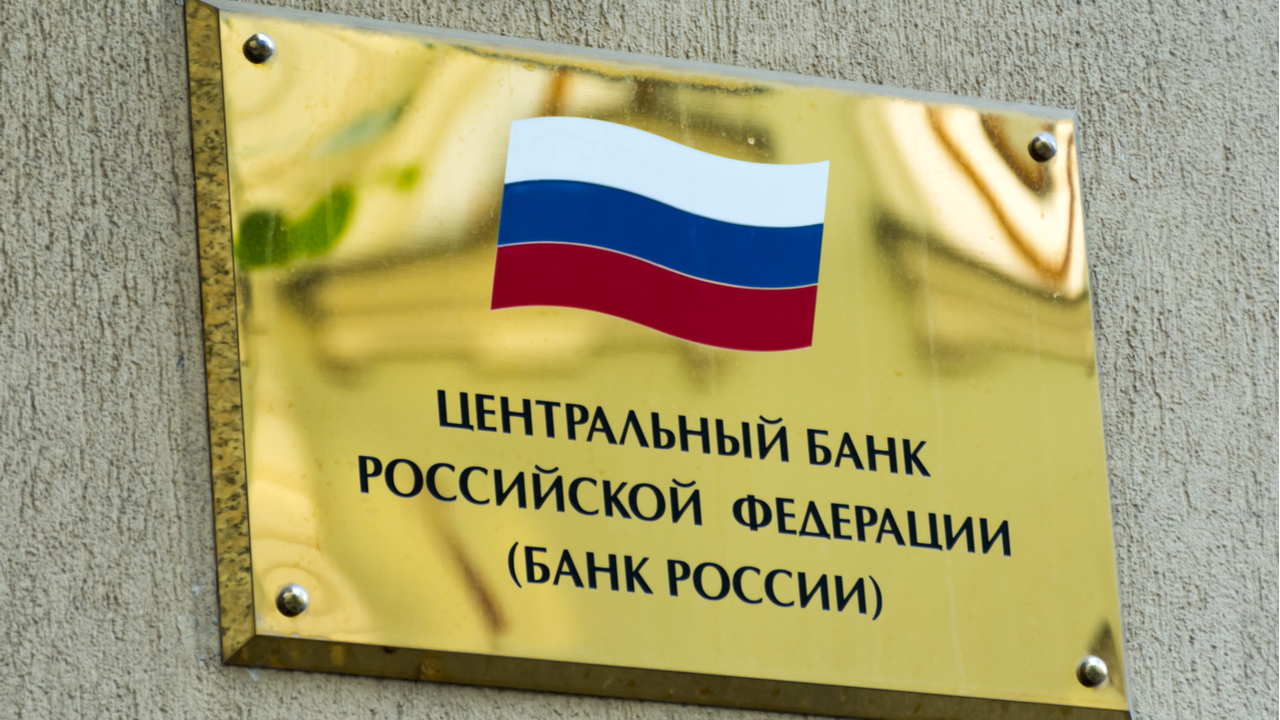
Bank of Russia to Study Risks of Crypto Investing With Banks and Payment Providers


The Central Bank of Russia (CBR) has set out to examine the risks associated with cryptocurrency investments. The regulator is going to conduct a dedicated study with the participation of major banks and payment processors operating in the Russian market.

CBR Adds Crypto to Its Survey Program for 2021

Russia’s central bank, known as Bank of Russia, is planning to carry out research regarding the risks that accompany crypto investing. The study titled “Assessment of risks of using cryptocurrencies” has been added to the recently published “Bank of Russia survey program for the second half of 2021.”

Bank of Russia to Study Risks of Crypto Investing With Banks and Payment Providers

The survey will be conducted in order to “obtain information on trends to assess systemic risks in connection with investments of Russian individuals and legal entities in cryptocurrency,” CBR explained in a note. The regulator will send out questions to a number of financial market participants, including 15 banks such as VTB, Tinkoff, Alfa-Bank, Raiffeisenbank, and the state-owned banking giant, Sberbank.

Bank of Russia also wants its study to feature input from the global payment systems Visa and Mastercard, as well as the Russian Mir, RBC reported. Payment service providers like Юkassa, Webmoney, Qiwi, and Western Union should expect to receive the central bank’s questionnaire too. The data submission deadline has been set to July.

Central Bank of Russia Remains Hostile to Cryptocurrencies

Over the past few years, the central bank of Russia has maintained a negative attitude towards cryptocurrencies. Moscow’s monetary policy regulator remains firmly opposed to accepting the decentralized digital money as a means of payment in the Russian Federation, where the ruble is the only legal tender by law. Bank of Russia is working on a digital version of the national fiat and aims to unveil a ‘digital ruble’ prototype by the end of 2021.

In June, the head of the CBR, Elvira Nabiullina, advised against crypto investments, referring to “speculative cryptocurrencies” as “the most dangerous of all strategies” for investors. “The price is very volatile and the losses can be enormous,” Nabiullina warned. She was also quoted by Komsomolskaya Pravda as saying:

The central bank never gives advice on where to invest, but in this particular case – [investing] here is definitely not necessary.

Early last month, Nabiullina called cryptocurrencies a monetary surrogate and voiced opposition to their use in the country. Russian legislation prohibits the issuance and circulation of “money surrogates.” At the same time, the CBR chairwoman admitted it’s difficult to restrict the crypto market at the national level since it is fundamentally transnational.

Why do you think Bank of Russia wants to conduct a crypto survey? Share your thoughts on the subject in the comments section below

Friday, 2 July 2021

Softbank Invests $200 Million in Brazilian Crypto Trading Platform Mercado Bitcoin


The multinational conglomerate holding company headquartered in Tokyo, Softbank operates a Latin America Fund that invests in startups focused on identification technology, e-commerce, education, fintech and now cryptocurrency solutions. The Softbank Latin America Fund revealed on Thursday that it invested $200 million in the crypto-asset exchange Mercado Bitcoin.

Mercado Bitcoin’s $200M Capital Raise: Softbank Funds One of the largest Series B funding rounds in LATM

The Softbank Latin America Fund has invested in Mercado Bitcoin’s parent company 2TM Group. The announcement highlights that it is one of the largest Series B funding rounds in Latin America and Softbank’s largest crypto investment in the Latin American continent. The investment brings 2TM Group’s unicorn status to $2.1 billion and the eighth-most valuable fintech firm in Latin America.

Mercado Bitcoin aims to leverage the financing to continue scaling operations and invest in more infrastructure. The company’s announcement emphasizes that over the last 12 months, Mercado Bitcoin has gathered 2.8 million clients. “Between January and May 2021, approximately 700,000 new customers signed up to use Mercado Bitcoin’s services,” the company’s announcement detailed. Additionally, Mercado Bitcoin’s trade volume in 2021 has seen massive growth as well “surpassing the total for its first seven years combined.”

“Mercado Bitcoin has become a global leader in the cryptocurrency space. We’ve been impressed by 2TM Group’s understanding of the Brazilian ecosystem, as well as their contribution to the evolving regulatory framework in Brazil,” Marcelo Claure, CEO of Softbank Group International and COO of Softbank Group said in a statement. The Softbank executive further added:

Cryptocurrencies have incredible potential in Latin America. We believe winning in Brazil is critical for 2TM Group and are excited to take part in this incredible journey.

Softbank Group and the Conglomerate’s Portfolio Companies Have Vested Interest in Fintech and Blockchain

Fintech companies and crypto solutions have gathered mainstream attention in Latin America and the first Bitcoin exchange-traded fund (ETF) in Latin America made its debut on the Brazil Stock Exchange last week. Softbank Group and the firm’s Latin America Fund have been growing portfolio companies based on these trends. The Softbank Latin America Fund also backs fintech firms such as Creditas, Cortex, Inter, Loggi, Konfio, and Ualá.

The multinational conglomerate Softbank has been into crypto and blockchain technology for quite some time. In October of 2019, Softbank announced it was working with Tbcasoft, and IBM on a cross-carrier blockchain technology project. Softbank also worked with Tbcasoft when the firms created a blockchain-based “Identification & Authentication” Working Group the same year.

One of the Tokyo-based company’s portfolio firms is also leveraging crypto-asset solutions. Just recently, in mid-April 2021, the Softbank-backed global space provider Wework recently revealed it was accepting cryptos and keeping digital assets on its balance sheet.

Mercado Bitcoin’s financing from Softbank follows the company’s Series A round in January 2021, which was co-led by Parallax Ventures and G2D/GP Investments. Mercado Bitcoin aims to use the funding to “accelerate growth across 2TM Group’s portfolio.” 2TM Group’s portfolio also includes the crypto wallet provider Meubank and it hopes to launch a fund called the “Bitrust” in the near future.

What do you think about Softbank funding 2TM Group and its subsidiary Mercado Bitcoin with $200 million in financing? Let us know what you think about this subject in the comments section below.

Wednesday, 30 June 2021

Deutsche Börse Group Acquires Major Stake in Swiss Firm Crypto Finance AG


On Tuesday, Deutsche Börse Group, marketplace manager for the trading of shares and other securities, explained the company has acquired a major stake in Crypto Finance AG. The move adds to Deutsche Börse’s extension into the cryptocurrency industry in order to provide custody solutions and a “direct entry point for investments.”

Deutsche Börse Group to Expand Further Into Digital Currency Ecosystem

Deutsche Börse Group’s latest announcement explains that the company wants to build a trusted and regulated cryptocurrency ecosystem in Europe. The financial institution that rakes in €2.936 billion ($3.5 billion) in revenue annually explained it has obtained a majority stake in Crypto Finance AG.

The Switzerland-based Crypto Finance AG is a digital currency-focused finance organization that offers the storage, investment, and trading of crypto assets to professional clients. As a member of Deutsche Börse Group, the company will scale while also assisting Deutsche Börse’s expansion into new financial territories.

In a press statement, Deutsche Börse explains that it plans to make Crypto Finance AG’s products and offerings more accessible. “The goal is to establish a neutral, transparent, and highly scalable digital asset ecosystem under European regulation,” the Frankfurt-based marketplace manager explained. “Digital assets will transform the financial industry,” Thomas Book, executive board member for trading and clearing at Deutsche Börse remarked.

Crypto Finance AG’s Services Complement Deutsche Börse’s Recent Offerings

The Deutsche Börse executive further added that Crypto Finance AG’s services and products complement the marketplace manager’s recent offerings. This includes 360X, a DLT-based platform for serial marketplace creation, and centrally-cleared crypto exchange-traded notes (ETNs). Book said there’s been “increasing demand” for crypto products and trusted partners. The founder of Crypto Finance AG, Jan Brzezek, will remain the leader of the company and still retains “significant personal holdings.”

“Since the beginning, our goal was to bridge the old and new worlds,” Brzezek said in a statement. “This is why we are excited to team up with a neutral partner like Deutsche Börse, who brings trust, reputation, and expertise in traditional financial market infrastructure.” According to the announcement, the acquisition deal was a “moderate three-digit CHF million range” and other terms were not disclosed. Both parties are expected to settle the deal by Q4 2021 if they gather regulatory approval.

“Deutsche Börse will hold a two-thirds majority in the 2017 founded fintech that has received multiple awards,” Deutsche Börse concluded. “The remaining shares stay with existing investors, including CEO and founder Jan Brzezek, who will continue to lead and manage the business.”

What do you think about Deutsche Börse acquiring a majority stake in Crypto Finance AG? Let us know what you think about this subject in the comments section below.

Standard Chartered, Fidelity, TP ICAP to Launch Cryptocurrency Trading Platform


Fidelity, Standard Chartered Bank, and TP ICAP are collaborating to launch a cryptocurrency trading platform. It will feature a marketplace for spot crypto trading and provide “connectivity and post-trade infrastructure into a network of digital assets custodians.”

  • TP ICAP, a leading provider of market infrastructure, announced Tuesday that it is launching a cryptocurrency trading platform in collaboration with Fidelity Digital Assets, Zodia Custody, and Flow Traders.
  • The new platform is subject to registration with the U.K. Financial Conduct Authority (FCA).
  • It “will feature a wholesale electronic marketplace for spot cryptoasset trading, including bitcoin and ethereum, as well as providing connectivity and post-trade infrastructure into a network of digital assets custodians,” the announcement details.
  • TP ICAP launched its digital asset business in 2019, enabling clients to trade crypto derivatives products.
  • Simon Forster, co-head of digital assets at TP ICAP, commented:

 Client demand to trade spot cryptoassets is significant and growing, with interest coming from our traditional customer base across the different asset classes we operate in.

  • Flow Traders, which has been providing liquidity to crypto markets since 2016, will be one of the initial liquidity providers on this new platform.
  • Zodia Custody is a digital asset custodian for institutional investors, established by Standard Chartered Bank to address the need for a digital asset custodian that truly understands custody.
  • The announcement notes:

The platform has already started to onboard clients and will launch to the market in the second half of the year.

What do you think about Standard Chartered Bank, Fidelity, and TP ICAP collaborating to launch a crypto trading platform? Let us know in the comments section below.

Monday, 28 June 2021

Bank of Tanzania Hints at Possible Crypto Ban Reversal as Spokesman Confirms Bank Is 'Working on the Directives Given'

In a hint that Tanzania might soon reverse its 2019 crypto ban, an unnamed spokesperson of the Bank of Tanzania (BOT) recently suggested the apex bank is “working on the directives given.” The remarks by the spokesperson follow Tanzanian President Samia Suluhu Hassan’s call on the country’s finance chiefs to prepare for cryptocurrencies.

BOT Move Commended

In a speech delivered shortly after El Salvador made bitcoin legal, President Hassan pointed to the inevitability of cryptocurrencies. However, as one report explains, the central bank spokesperson did not reveal whether or not the BOT is planning to adopt existing cryptocurrencies such as bitcoin or if it wants to issue its own digital currency.

Still, even with this lack of clarity, some members of Tanzania’s blockchain and crypto community have welcomed the reports. For instance, Abdulmajid Nsekela, the chairman of the Tanzania Bankers Association commends the reports that are attributed to the BOT’s spokesperson but warn of challenges that lie ahead. Nsekela said:

The most challenging element for regulators is to be caught by surprise by innovations. Gradual preparations would help the central bank assess the risks and come up with ways of addressing them in advance.

Slow Progress

In November 2019, the Tanzanian central bank banned cryptocurrencies saying these were not recognized by local law. However, following Hassan’s call, Tanzania now joins few other African countries that have or are planning to reverse regulations that restrict cryptocurrencies and other emerging technologies.

In the meantime, the same report also quotes Faith Mwangi, an analyst at Tellimer, who suggests that implementation of Hassan’s call will be slow. Mwangi explained: “The change in tone from Tanzania’s president is clear, but wait to see whether the central bank will take concrete steps towards embracing cryptocurrencies.”

The analyst also points to Uganda where President Yoweri Museveni similarly promised the reversal of anti-crypto regulations. However, according to the report, since the 2017 announcement, Uganda’s central bank is still to rescind the restrictions.

How long do you think it will take for BOT to completely reverse its 2019 crypto ban? Tell us what you think in the comments section below


Indian Banks Halting Services to Crypto Industry Post RBI Clarification


Several Indian banks have reportedly halted services to customers dealing in cryptocurrencies despite the central bank, the Reserve Bank of India (RBI), informing them that the banning circular is no longer valid. The latest bank to join the fray is IDFC First Bank.

  • IDFC First Bank has become the latest bank to halt services to crypto companies, Livemint reported last week, citing industry sources. The publication conveyed:

IDFC First Bank over the past week temporality stopped services, as it is doing enhanced due diligence regarding banking support to crypto exchanges.

  • This followed the RBI clarifying to financial institutions that its April 2018 circular which banned banks from providing services to crypto businesses is no longer valid and should not be cited or quoted. The central bank added that banks may “continue to carry out customer due diligence processes” in compliance with existing regulations.
  • Other banks that have kept their distance from clients dealing in cryptocurrencies include ICICI Bank, Yes Bank, and Paytm Payments Bank, the publication noted.
  • HDFC Bank and State Bank of India (SBI) have also cautioned their users against the risks of dealing in cryptocurrencies, including bitcoin, due to them being unregulated.
  • However, bitcoin and other cryptocurrencies are not banned in India, both the government and the RBI have confirmed.
  • The Indian government is still working on a cryptocurrency bill. It was supposed to be introduced during the budget session of parliament but it was not. Now, there are reports of the government setting up an expert panel to re-examine the recommendations in the current bill, which seeks to ban all cryptocurrencies except the ones issued by the RBI.
  • “IDFC Bank joins a few of the other nationalized banks that have taken the stance to not service cryptocurrency-based companies,” Sathvik Vishwanath, CEO and co-founder of cryptocurrency exchange Unocoin, was quoted by Livement as saying. He added:

While RBI has clarified its stance that the banks can provide services after their due diligence, it is abruptly insane for these banks to take their foot back. These kinds of reactions also alarm the investors of cryptocurrencies for the wrong reason.

What do you think about Indian banks halting services to crypto customers? Let us know in the comments section below.

Sunday, 27 June 2021

Swiss National Bank Has No Plans for a Digital Currency: Report


The Swiss National Bank tested the feasibility of CBDCs in 2020.

The Swiss National Bank (SNB) is not planning to introduce a central bank digital currency (CBDC), according to a report in the Swiss weekly business publication Handelszeitung.

At a recent press conference hosted by the Swiss Bankers Association, SNB’s chief economist Carlos Lenz announced that there is no need for a digital franc because the current payment system works well without one. Lenz also criticized blockchain technology, calling it “very inefficient.” “I don’t think a decentralized solution is ideal,” he said.

Switzerland has been researching central bank digital currencies since at least 2019, when the Swiss parliament asked the government to examine the potential of creating a CBDC. In December 2019, the government concluded that a digital franc would be too risky. The country has created a friendly environment for blockchain startups with the Zug Valley among the world’s hotbeds of innovation. Diem, the Facebook-backed stablecoin project formerly known as Libra, is also based in Switzerland.

Despite the Swiss government’s negative stance on central bank digital currencies, Swiss CBDC research has continued. In 2020, the Bank of International Settlements (BIS) wrapped a trial testing the feasibility of a CBDC used among financial institutions, and earlier this month the SNB and the Bank of France started a cross-border bank-to-bank CBDC experiment called “Project Jura.”

But during the press comments, Lenz emphasized that these studies are just that – studies, not implementations.

“This is not about implementation on a productive level,” Lenz stated. “There are currently no plans to introduce digital bank money. This also applies to the wholesale area.”

Lenz compared the ongoing scramble to develop a CBDC to the fear that many in Switzerland felt when the euro was introduced.

“We had such discussions when the euro was introduced,” Lenz said. “There was also fear that payments would suddenly be made in euros.

Saturday, 26 June 2021

10,000 Financial Institutions Can Now Let Customers Buy, Sell, Hold Bitcoin Through Their Bank Accounts


Banks and credit unions of all sizes can now facilitate the buying, selling, and holding of bitcoin within their banking platforms thanks to a collaboration between Finserv and New York Digital Investment Group (NYDIG). Finserv currently has about 10,000 financial institution clients.

All Banks Can Now Let Customers Buy, Sell, Hold Bitcoin via Bank Accounts

Finserv Inc. (NASDAQ: FISV), a global leader in payments and financial technology, announced Wednesday that “Banks and credit unions of all sizes can facilitate buying, selling, and holding bitcoin within their digital banking platforms.”

To enable the bitcoin option, Finserv has integrated with New York Digital Investment Group (NYDIG), a bitcoin technology and financial services subsidiary of Stone Ridge, a $10 billion alternative asset manager.

Finserv has nearly 10,000 financial institution clients, almost 6 million merchant locations globally, and 100 million digital banking users, its website details. A member of the S&P 500 Index and the Fortune 500, the company claims to facilitate more than 12k financial transactions per second.

The announcement explains that “the integration with NYDIG will allow consumers to manage bitcoin transactions directly within their financial institution’s online and mobile banking portals, providing users an easy way to buy, sell and hold the popular digital asset through their trusted financial institutions.”

Byron Vielehr, chief digital and data officer at Finserv, commented:

Interest in cryptocurrency, and particularly bitcoin, has skyrocketed over the past several years, to the point that bitcoin investing is now a commonplace activity.

“People continue to turn to financial institutions as a central place to manage their financial activity, and being able to offer this capability will help position banks and credit unions at the forefront of their customers’ financial lives,” the announcement continues.

California-based First Foundation Bank (NASDAQ: FFWM) is already working with Finserv and NYDIG to offer the bitcoin option to its customers. CEO Scott F. Kavanaugh commented:

Digital assets have caught the eye of consumers and investors. If our industry is truly committed to innovation and the financial future of our clients, we need to lead in this area and help create a secure and trusted platform for using bitcoin for everyday financial matters.

In addition to enabling banks to allow their customers to buy, sell and hold bitcoin within their bank accounts, Finserv and NYDIG are “working toward implementing additional functionality, including the ability for banks to implement bitcoin-based rewards programs,” the announcement notes.

Do you think all banks and credit unions should provide the option for customers to buy and sell bitcoin on their platforms? Let us know in the comments section below.

J.P. Morgan’s survey says 51% institutional investors believe in cryptocurrency!


📣 J.P. Morgan’s survey says 51% institutional investors believe in #cryptocurrency!

👉 Investment bank JPMorgan surveyed thousands of #investors from 1,500 institutions and found that 51% of them have faith in cryptocurrency.


👉 The survey result shows that 42% of investors feel that cryptocurrency is here to stay, and 9% even consider it an important asset.


👉 On the other hand, 49% of Investors consider it a “rat poison squared,” the term used by #BerkshireHathaway CEO #WarrenBuffett to characterize Bitcoin.


👉 Though only 10% of the investors prefer cryptocurrency on a professional level, when asked about their portfolio, a survey found that 40% of the investors prefer cryptocurrencies.


👉 Studying the numbers, two of JPMorgan’s top strategists #MarkoKolanovic and #DubravkoLakos-Bujas, wrote, “Investors’ view on cryptocurrency’s future is very divided.”

Citigroup Launches Digital Assets Group to Provide Clients Access to Cryptocurrencies

Citigroup has reportedly set up a “digital assets group” to offer clients access to cryptocurrencies, which will operate within the bank’s wealth management division.

  • Citigroup has established a “digital assets group” within its wealth management unit, according to a memo to staff seen by Bloomberg.
  • Iain Armitage, global head of capital markets for Citi Private Bank, and Rob Jasminski, who oversees the bank’s investment management arm globally, said in the memo that the new digital assets group will be led by Alex Kriete and Greg Girasole, the publication conveyed. They will serve as liaisons to “all other business groups at Citi who are expanding into this rapidly emerging space also,” the memo says. In addition:

They will be responsible for developing our future product capabilities, client delivery mechanisms and thought leadership around all digital assets.

  • The memo further explains that Citigroup plans to help clients invest in cryptocurrencies, stablecoins, non-fungible tokens (NFTs), as well as central bank digital currencies (CBDCs).
  • In May, the Financial Times reported that Citigroup was contemplating launching crypto services after seeing a “very rapid” accumulation of interest in bitcoin across a broad spectrum of clients, including large asset managers.
  • In March, the firm said bitcoin was at a tipping point and could become the preferred currency for international trade.
  • At the end of May, Citigroup CEO Jane Fraser gave her testimony on cryptocurrency before the Senate banking committee. She stated that Citigroup was taking a “measured approach” to cryptocurrency as the bank sought “to understand changes in the digital asset space and the use of distributed ledger technology, including demand and interest by our clients, regulatory developments and technology advancements.”
  • What do you think about Citigroup providing access to cryptocurrencies? Let us know in the comments section below.


Tuesday, 22 June 2021

SEBA Bank Completes Series B Fundraising to Fuel Growth For Providing Smart Banking and Full Services in Digital and Traditional Assets


FINMA licenced Swiss Seba Bank – who already provide a seamless, secure and easy-to-use bridge between digital and traditional assets – approved the completion of its Series B capital increase at its Extraordinary General Meeting today. SEBA Bank is primed to fuel and accelerate its growth strategy according to the team.

Guido Bühler, CEO of SEBA Bank, stated:

“I am delighted that the strengths of SEBA Bank and its track record in 2020 were recognised by our existing key shareholders and new investors leading them to participate in a second capital raise. This support will allow us to accelerate the strong growth SEBA Bank is delivering as we also plan to expand into new markets in Middle East and Asia and support US institutional clients.”

All existing key shareholders and new investors from Switzerland, Europe and Asia participated in the capital raise. With this strategic milestone, SEBA Bank is well-positioned to further deploy its domestic and international expansion and capture high growth.

SEBA Bank has today secured equity capital which will further strengthen its capital base, and this new equity will allow to expand the product and service offering, increase SEBA Bank’s lending capacity for clients and start leveraging the established hub in Switzerland into new markets.

SEBA Bank will tokenise its shares of the Series B fundraising soon after the blockchain law will come into force in Switzerland.

The capital raise follows the completion of our leading integrated digital and traditional investment platform. SEBA Bank will leverage its unique differentiators including:

  • Most secure custody and wallet services with a military-grade security solution
  • Top integrated trading platform including spot, derivatives and credit
  • End-to-end tokenisation platform across the entire lifecycle of digital assets and currencies
  • A wide offering of investment products and discretionary mandates supported by institutional grade buy-side research

Saturday, 19 June 2021

Danske Bank Takes Position on Cryptocurrencies, Will Not Interfere With Crypto Trading


Danske Bank will not block credit cards used in crypto trading, according to its newly announced position on cryptocurrencies. The Danish bank would also accept deposits related to crypto investments, although it follows a cautious approach towards decentralized digital assets.

Denmark’s Largest Bank Clarifies Its Stance on Cryptocurrencies

Responding to mounting inquiries from customers and other stakeholders, Danske Bank has released an official position on crypto assets. “In recent years, cryptocurrencies such as bitcoin and ethereum have received significant attention from investors and media,” the bank noted, outlining its current stance on crypto trading and investing.

Denmark’s largest banking institution recognizes that “cryptocurrencies represent a significant digital innovation in financial services” and praises the “great potentials in the blockchain technology.” At the same time, it continues to maintain “a very cautious approach towards cryptocurrencies.” The bank listed several reasons for that.

In the first place, Danske finds it hard to meet its obligations to fight financial crime and money laundering as crypto trade is “not always sufficiently transparent.” Pricing is opaque and fluctuating, the bank added, leaving investors with limited market insight.

Furthermore, as crypto trading is only partially regulated, clients do not get the same level of consumer protection that comes with other financial products, Danske insisted. The bank also feels that the “extremely energy intensive” processing of cryptocurrency transactions clashes with its own ambition to promote sustainable development

Crypto Investors Are Welcome to Deposit Funds With Danske

Citing these concerns, Danske Bank reminded customers that its platforms do not currently support the trading of cryptocurrencies and crypto-based financial instruments. The financial institution also advised against investing in digital assets or related products in general. However, the Danish banking group pledged its support for the development of crypto regulations under the new EU legislation called Regulation of Markets in Crypto Assets (MiCA) while emphasizing:

We continuously monitor developments in the area of cryptocurrencies, and as the cryptocurrency market matures and is further regulated, we will review our position.

Despite its hesitant attitude towards cryptocurrencies, Danske is not completely turning its back on crypto traders and investors. For example, the bank said it doesn’t block credit cards when they are used in crypto trading, provided customers comply with applicable anti-money laundering rules and laws. The bank also stressed it would treat deposits of funds stemming from cryptocurrency investments just like deposits from any other type of investment.

What’s your opinion about Danske Bank’s position on cryptocurrencies? Share your thoughts in the comments section below.


Goldman Sachs Leverages Crypto Management Firm Galaxy Digital to Swap Bitcoin Futures


Galaxy Digital’s co-president Damien Vanderwilt announced today that his firm has partnered with Goldman Sachs to help provide bitcoin futures products. The partnership marks one of the first occasions where an American multinational investment bank has partnered with a crypto asset service provider.

Galaxy Serves as Goldman’s Counterparty for Bitcoin Futures Trading

Goldman Sachs is trading bitcoin futures products with Galaxy Digital according to statements made by Galaxy’s co-president Damien Vanderwilt during an interview with CNBC.

Galaxy Digital is a financial services and investment management innovator founded by the company’s CEO Mike Novogratz. Vanderwilt explains that Goldman Sachs, the bank with $2.1 trillion assets under management (AUM), may entice other financial incumbents to follow its lead.

“There’s a whole dynamic with the major banks that I’ve seen time and time again: safety in numbers,” Vanderwilt explained during his discussion about the subject. “Once one bank is out there doing this, the other banks will have [fear of missing out] and they’ll get on-boarded because their clients have been asking for it.”

According to Vanderwilt, Goldman depends on Galaxy because regulatory policy stops the multinational investment bank from handling the leading crypto asset directly. Max Minton, head of digital assets for Goldman’s Asia-Pacific region said during the announcement that the bank procures clientele with the assets they demand.

“Our goal is to equip our clients with best-execution pricing and secure access to the assets they want to trade,” Minton remarked. “In 2021, this now includes crypto, and we are pleased to have found a partner with a broad range of liquidity venues and differentiated derivatives capabilities spanning the cryptocurrency ecosystem.”

As More Institutional Players Join the Fray, ‘the Less Volatility There Will Be’

The statements from Minton and Vanderwilt follow the report that said Goldman was prepping to offer ether futures and options swaps. At the time, Goldman said “institutional adoption will continue” in the crypto space.

In mid-April Galaxy Digital revealed it had entered the bitcoin exchange-traded fund (ETF) fray when it submitted its Form S-1 registration with the U.S. Securities Exchange Commission (SEC).

Vanderwilt also said that when more institutional players join the crypto ecosystem volatility will grow less and less.

“You’re moving the market participants from being north of 90% retail, a huge chunk of which have access to ridiculous amounts of leverage, into an institutional community, who have proper, tried-and-tested rules and regulations about leverage, asset-liability mismatch, and risk,” Vanderwilt concluded. “The more activity that moves into the institutional community, the less volatility there will be.”

What do you think about Goldman Sachs and Galaxy Digital partnering to offer bitcoin futures to clients? Let us know what you think about this subject in the comments section below.