The Breakdown is written, produced by and features NLW, with editing by Rob Mitchell and additional production support by Eleanor Pahl. Adam B. Levine is our executive producer and our theme music is “Countdown” by Neon Beach. The music you heard today behind our sponsor is “Razor Red” by Sam Barsh. Image credit: hamzaturkkol/iStock/Getty Images Plus, modified by CoinDesk.
Synapse Network is developing the first cross-chain investment ecosystem based on blockchain technology. It will offer five cross-chain products for the cryptocurrency sector, including a DEX and DeFi marketplace, saving a lot of time and effort to everyone frustrated with the current fractured landscape.
Technology specialist Synapse Network will provide investors with a simple one-stop-shop solution to consolidate their transactions. Compared to a multichain solution, where you need to invest into one of multiple pools – a costly and time-consuming process – it allows investors to allocate their funds in different blockchains, including Ethereum, Binance SmartChain, Solana, Polygon and many other popular blockchains. So investors can trade ETH to MATIC or to BNB in just one swap.
“The cross-chain revolution is the next big step of blockchain evolution, so we are thrilled to be the only player in the market to offer this technology. Cross-chain means you can choose any chain you want, or even several at a time, for any investment that you desire, – Synapse Network Co-Founder Paweł Łaskarzewski”
The ecosystem also includes a chain agnostic launchpad bringing together projects and private investors to enable investment opportunities in early-stage startups, and an accelerator and incubator for startups and entrepreneurs, where ideas are converted into working projects. There will also be an Investment Syndicate of trusted and reliable VC funds, business angels, tech partners, private investors and blockchain projects, providing fast-track access to capital, technology and partnerships.
Why Venture Capital Funds Back the Synapse Network Team
Synapse Network already has a live, working cross-chain launchpad product. It held an early community presale using it, is now listing startups/projects based on multiple blockchains and is enabling investors utilizing the product to invest in cross-chain investments. In addition, it has raised nearly $2,000,000 from venture capital and community funding rounds; current partners include Black Dragon, Dutch Crypto Investors, Moonwhale, Chainlink, OIG, ICO HUB, Crypto Weekly, Minted Lab and CSP DAO.
Synapse Network Co-Founder Paweł Łaskarzewski is a Technology executive and Enterprise Solution Architect with a demonstrated history of over 20 years of experience in the IT industry. He is skilled in large scale projects with strong problem solving and business development skills, bridging the gap between technology innovation, business, and operations. Paweł has worked for several international companies, including Citibank, EuroSport and B/E Aerospace.
His Co-Founder, serial entrepreneur and investor Michał Domarecki, has founded and run several successful companies internationally in the areas of IT, transport and logistics. He has been involved in cryptocurrencies for over six years, actively investing in and advising blockchain startups and working with brands such as Crypto.com and founding Gems Reviews.
To learn more about the team and the amazing solution they developed visit Synapse.Network and follow them on Twitter and Telegram.
This is a sponsored post. Learn how to reach our audience here. Read disclaimer below.
A bill has been introduced in Argentina to allow workers to receive their salaries in cryptocurrency. He explained the idea is that workers “can strengthen their autonomy and conserve the purchasing power of their remuneration.”
Argentina’s national deputy for the Mendoza province, José Luis Ramón, tweeted that he has introduced a bill allowing workers to get paid in bitcoin. He wrote, as translated by Google:
I presented a bill so that independent workers … have the option of receiving their full or partial salary in cryptocurrencies.
He added: “The idea is that they can strengthen their autonomy and conserve the purchasing power of their remuneration.”
The Argentine lawmaker said that cryptocurrencies “have been used for a long time, because of the advantages they offer.”
The deputy noted that “This project was born from our participation in the Knowledge Economy forum some years ago, where we saw the need to solve some problems.”
Following El Salvador making bitcoin legal tender, Argentina deputy Francisco Sánchez temporarily put laser eyes on his profile picture, tweeting, “I can’t believe it, but this is how it is.”
Cryptocurrency adoption has been growing in Argentina. In May, a report found that Argentines were increasingly interested in bitcoin, ether, and stablecoins. Ripio Director Juan José Méndez commented at the time that “The pandemic accelerated the adoption of crypto platforms. Today we have 1 million users in Argentina when at the beginning of 2020 we had 400 thousand, and it is a figure that grows month by month.”
A survey conducted in Argentina last year showed that 73.4% of participants considered that in the current economic scenario, cryptocurrencies are the most effective way to save and protect their funds.
The eccentric 75-year-old cybersecurity tycoon John McAfee’s death has spurred a lot of controversy and speculation since he passed. Now McAfee’s widow Janice McAfee is speaking out and she doesn’t believe the mainstream media’s reports of her husband’s suicide. Moreover, reports now say that McAfee was carrying a suicide note in his pocket when he was found dead in a Spanish jail cell.
John McAfee’s Wife Is Not Buying the Mainstream Media’s Tales, Unknown Source Allegedly Finds Note
On June 23, reports from Spain declared that John McAfee was found dead in a penitentiary located on the outskirts of Barcelona. Hours before his alleged death, the Spanish court ruled in favor of McAfee’s extradition to the U.S. where he faced charges for tax evasion. The publication El Pais said at the time of death that when prison guards found McAfee hanging in his cell, the prison’s medical services tried to revive him but were unable to.
Now 14 days later, reports are saying that McAfee may have had a suicide note on his person before he died. An unnamed source who could not reveal the text written in the alleged note said that investigators have still not completed the inquiry into McAfee’s death. When McAfee’s widow and his Spanish lawyer, Javier Villalba, heard about the note via the media, Villalba said authorities never told the family about McAfee’s ostensible suicide note.
Janice McAfee, Spain, June 25, 2021. Reuters image/Albert Gea
Meanwhile, as numerous conspiracy theories surround McAfee’s death, his widow Janice McAfee has published a letter she wrote on Twitter.
“I cannot begin to describe this pain I am feeling,” the antivirus tycoon’s wife tweeted. “That everyone who truly loved John is feeling. I have been struggling to write this tweet since the news of John’s death. I still cannot believe he is really gone. I miss you and I will love you forever John David.”
The letter below her Twitter statement slammed the media and the recent report of an alleged suicide note.
“The story of John’s ‘suicide’ was already prepared and presented to the public before I or his attorneys were even notified of his death. Words cannot describe how enraged I am at the fact that I had to hear the news of John’s death via a DM on Twitter,” Janice McAfee’s statement reads. “And now it’s being conveniently reported that there was a ‘suicide note’ found in his pocket, something that was not mentioned when I collected John’s belongings from the prison and another piece of information the media somehow got a hold of before myself and John’s attorneys,” she added.
Janice McAfee: ‘I Do Not Accept the ‘Suicide’ Story That Has Been Spread by the Malignant Cancer Called MSM’
John’s wife further said her husband “should have never spent a day in prison let alone nearly nine months.” Her letter continued by stressing that McAfee was a fighter and he had “so much more fight left in him.”
“I spoke with him twice the morning of the 23rd and in our last conversations, we spoke about the court’s decision to extradite him to the U.S. This decision did not come as a surprise to John, myself, or his lawyers,” McAfee’s widow continued. “We were prepared for the Spanish courts to grant the request for extradition, we had a plan of action in place to begin the appeal process and we discussed plans for the next stages of his legal fight. The extradition would have not happened immediately, it would have taken many months at least.”
A spokesperson from the Catalonia investigation team explained to the press that a forensic team was working on the case. The team will be performing toxicology tests on McAfee’s body but the official cause of death won’t be released for “weeks.” “He told me to be strong and not to worry, we would continue to fight all the necessary appeals,” McAfee’s widow further said. “His last words were I love you, I will call you in the evening but sadly that call never happened.”
Janice added that she was determined to find answers as to what really happened and for now, she doesn’t trust the mainstream media’s (MSM) story.
“The investigation into John’s death is still ongoing but I will share what information I can when I can,” Janice’s letter concludes. “Until then, I do not accept the ‘suicide’ story that has been spread by the malignant cancer that is the MSM. They and their unnamed sources are not to be trusted.”
What do you think about Janice McAfee’s claims and her critique against mainstream media and the alleged suicide story? Let us know what you think about this subject in the comments section below.
Joe Biden wants to crackdown on ransomware according to statements he made on Friday, after hackers hijacked software from a Miami-based IT supplier called Kaseya. Hundreds of American businesses were affected by the breach as the attackers encrypted the files of some 200 clients. Biden said on Friday that he’s ordered an investigation into the exploited Florida-based IT infrastructure.
Biden Directs US Intelligence Agencies to Look Into the Kaseya Ransomware Attack
Following the Colonial Pipeline ransomware attack, this past week an IT supplier called Kaseya was breached and the company’s software management tool called VSA was exploited. This attack affected a great number of Kaseya clients on Friday and suspicions of Russian gang involvement were sparked by investigators. Huntress, a security company, said that the company believes Russians were involved and blames a gang called Revil. The Revil ransomware gange is suspected of attacking the meatpacking company JBS last month as well.
American president Joe Biden remarked during a public appearance that he had directed U.S. intelligence agencies to investigate the matter and that the U.S. would do something if Russia was found to be behind it. Last month, Biden met with Russian president Vladimir Putin and told the leader that if ransomware attacks continued and were found to be from Russia there would be consequences. However, Biden said “we’re not certain” who was behind the attack on the Florida IT company and added:
The initial thinking was it was not the Russian government but we’re not sure yet.
Kaseya’s chief executive, Fred Voccola, told the press that the company had found the vulnerability and would “release that patch as quickly as possible to get our customers back up and running.” John Hammond, Huntress senior security researcher, said that this single piece of shared software allowed hundreds of companies to get exploited. “This is a colossal and devastating supply chain attack,” Hammond stressed on Friday.
Ransomware Has Pushed the Biden Administration Toward Investigating the Crypto Ecosystem
Biden’s statements follow U.S. Department of State’s undersecretary of state for political affairs Victoria Nuland’s comments about the Colonial Pipeline hack. Speaking of a discussion she had with Salvadoran president Nayib Bukele, Nuland remarked that after the Colonial Pipeline ransomware hack the U.S. State Department was taking a “tough look at bitcoin.”
The U.S.-based energy firm Colonial Pipeline saw its infrastructure fold in May after a ransomware gang exploited the system. Colonial Pipeline then paid the hackers 75 bitcoin (BTC) to get its infrastructure back online. However, in early June, U.S. law enforcement agencies said they recovered a majority of the funds (63.70 BTC) that were meant to go to the ransomware gang members.
Before the Kaseya hack, Biden’s administration had already published a “Memorandum on Establishing the Fight Against Corruption as a Core United States National Security Interest” in the first week of June. Biden’s directive to federal agencies put cryptocurrencies in the spotlight and the administration explains that the directive is meant to bolster national security.
A Kaseya hack response team member said that the breach on Friday sent out a myriad of ransom demands to all the businesses that were infected. Reuters reports that demands for “a few thousand dollars to $5 million or more” were sent to the clients affected by the Kaseya ransomware attack.
What do you think about Joe Biden giving a directive to U.S. intelligence agencies to investigate the Kaseya ransomware hack? Let us know what you think about this subject in the comments section below.
On the surface, it looks like Nigeria’s suspension of Twitter operations on June 4 may have been triggered by the microblogging company’s decision to take down a controversial tweet — from President Mohammed Buhari. However, as some observers have noted, the removal of the tweet may have presented the Nigerian government with the perfect excuse for targeting Twitter CEO, Jack Dorsey.
Nigeria’s Anti-Tech Policies
As widely reported, social media mogul Dorsey tweeted his support and endorsement of the EndSars protests back in October 2020. In a tweet that enraged Nigerian officials, Dorsey asked his followers to donate bitcoin to organizers of the protest after the movement’s bank accounts were frozen. Also, in addition to supporting the protests, the CEO recently tweeted and shared articles that call on Nigerian authorities to pursue what he calls the “bitcoin standard.”
Therefore, when Twitter deleted the President’s tweet after alleging that it had violated its policies, this proved to be the final straw. The Nigerian government responded to the tweet’s removal by suspending the company’s operations and by threatening to arrest Twitter users that defied an order to stop using the platform. While this decision has been condemned by many including the U.S. government, President Buhari’s administration remains undeterred.
Still, others are viewing Twitter’s suspension as a continuation of Nigeria’s anti-tech policies that appear to have started with the targeting of the crypto industry. Starting on February 6, 2021, Nigerian financial institutions have been adhering to a Central Bank of Nigeria (CBN) directive that requires them to stop extending their services to businesses or individuals that deal with cryptocurrencies.
De Facto Home to the Crypto Community
As a result of this directive, players in Nigeria’s crypto industry have had to resort to platforms that cannot be censored by the government. However, unlike the CBN directive, the suspension of Twitter in Nigeria appears to have indirectly created an even bigger challenge for the country’s crypto industry. As one Nigerian media outlet explained, Twitter has acted as “the voice of the crypto world and has been recognized as the de facto home of the crypto community.” The outlet warns that with Twitter now blocked, Nigerian crypto enthusiasts can no longer “get insights and perspective from some of the greatest minds in the crypto space.”
This view is shared by Adedayo Adebajo, who is the managing director of Jerulida Africa DLT. In response to inquiry sent by Bitcoin.com News, Adebajo said:
Most crypto influencers and news are obtained and spread on Twitter. The social media platform is the best source for one to get real-time updates on market trends. The Twitter ban has for example affected all businesses including blockchain and crypto-related enterprises who carry out their outreach and marketing using Twitter.
When the CBN directed financial institutions to stop offering their services to crypto entities earlier in the year, crypto exchanges and traders responded by moving their business to P2P platforms. As previously confirmed in a report by Bitcoin.com News, Nigeria’s P2P bitcoin volumes surged following the imposition of the CBN directive. Similarly, some Nigeria-based Twitter users have responded to the Twitter ban by installing virtual private network (VPN) applications on their mobile devices.
Use and Impact of VPNs
This growing use of VPNs by Twitter users in Nigeria has been confirmed by Nigeria-based crypto enthusiasts like Aniekan Fyneface, a Nigerian blockchain enthusiast and content developer. In his response to an inquiry from Bitcoin.com News, Fyneface notes that many Nigerians are still active on Twitter despite the suspension. Still, this use of VPNs has not had the desired results, according to Adebajo. He explained:
Yes, VPN still allows people to use Twitter, but a huge percentage of the population either don’t have the luxury of money, time or tech know-how on how to go about it, so they just stepped back. The Twitter ban is a huge blow in the heart of all businesses and crypto. Tweets are not getting as much engagement as before while many people are in the dark on the trends.
Meanwhile, Fynface tells Bitcoin.com News that the Twitter ban is unlikely to have a big impact on the industry. He insists that Nigerian crypto users will still find alternative ways of accessing information just like they have found ways of using their bank accounts to buy cryptocurrencies even after the CBN directive was issued.
Do you think the suspension of Twitter by Nigerian authorities is hindering the growth of the country’s crypto space? Tell us what you think in the comments section below.
The Spanish Congress has approved the antifraud law that was amended last month by the senate. Spanish citizens must now inform about their crypto holdings even outside the country. The new law further establishes severe fines for citizens who fail to share this information with authorities. A limit on how much money citizens can pay in cash for services has also been also established.
Antifraud Law Toughens Crypto Oversight
Spain finally approved its long-discussed antifraud law that establishes a series of controls on cryptocurrency and cash. The recently passed law includes two important resolutions and amendments proposed by the Senate. First, Spanish citizens now must inform about the cryptocurrencies they hold both inside and outside the country. Second, the law establishes limits on cash expenditures to better control capital movement.
The law, introduced in 2018 and filed until recent times, establishes harsh fines for citizens who fail to present their crypto holdings in time. The controversial ‘720 model’ will apply for the establishment of fine amounts, even though Spain faced criticism in the EU for implementing it back in 2015. Based on this model, citizens could pay fines of up to 150% if they fail to present reports within a designated period.
However, the EU is expected to present its resolution on the issue on July 15th, which could jeopardize the implementation of the new Spanish law.
Cash Transactions Also Regulated
These new limits for transactions with cash could change how citizens conduct business in Spain. Now, a limit of 1,000 euros will apply for services professionals provide. The law reduces this limit from 15,000 to 10,000 euros for individuals outside of Spain. However, the resolution has also been contested by the European Central Bank. In 2018, then president of the ECB, Mario Draghi, raised concerns about the potential negative effects of this measure and asked to stop it. The ECB stated:
This limitation makes it difficult to liquidate legitimate operations using cash as a means of payment, thus endangering the concept of legal tender.
The European Directive establishes the limit at 10,000 euros, ten times the number Spain has now approved. All of these measures were established to follow a clear objective: to toughen controls on tax and capital movements in the country. But this could force citizens to use digital payments to settle more transactions. Consequently, the law may also drive them to more alternative payment methods such as cryptocurrencies in the long run.
What do you think about the new antitrust law approved by the Spanish Congress? Tell us in the comments section below.
ByteDance, the Beijing-based parent company of video sharing app TikTok, has reportedly begun selling the app’s AI algorithm to other companies through a new division called BytePlus. According to the company’s website, BytePlus’ client list already includes companies from the US (Goat), Singapore (WeGo), Indonesia (Chilibeli), and India (GamesApp).
The recommendation algorithm that drives TikTok’s popularity is a big part of it; your use of the app directly affects the videos that are recommended to you. In a recent blog post, the company outlined how the ForYou feed chooses which videos to serve each individual user. The app’s recommendations are based on your interactions with videos, such as clicking the like button, sharing, or creating video
Video data, such as the caption and hashtags, is also taken into consideration. Additionally, your device and account settings, such as what device you’re using, language preferences, and your location, are further incorporated.
This report claims that customers have the opportunity to utilise the recommendation algorithm, as well as personalise it for their applications and customers. Among other things, BytePlus’s website claims that the company offers automatic speech and text translation, real-time video effects, and data analysis tools.
A number of executive orders passed by former US President Donald Trump had attempted to prevent China-based apps from using American app stores, with TikTok among them. The ban almost led to Microsoft buying TikTok from ByteDance but the deal never went through and the Biden administration revoked the bans in June. Despite the pressure from Trump, though, TikTok reached more than 100 million monthly US users last year.
The Nasdaq-listed cryptocurrency exchange Coinbase is actively building a cryptocurrency hub in India. The company says it has “ambitious plans” for the South Asian crypto hub and is looking to hire for many positions, including hundreds of engineers.
Coinbase Has ‘Ambitious Plans’ for Its Indian Crypto Hub
Coinbase published a blog post on Friday, authored by Pankaj Gupta, the company’s VP of Engineering and Site Lead in India. Gupta joined Coinbase about two months ago “to establish and lead a new tech hub for Coinbase in India,” he explained, elaborating:
There’s never been a more exciting time for builders working in crypto. This is true worldwide, but especially in India which is seeing a boom in crypto-native talent and in creating and growing important crypto projects.
“It is early days for our India tech hub but it has already taken off with an incredible amount of interest in our open roles from across India,” Gupta emphasized. He added that Coinbase is “also exploring startup acquisitions and acquihires.”
The Nasdaq-listed crypto exchange is currently hiring senior and junior roles “across product management, user experience, design and program management.” Gupta noted that the company is also “creating a core support team — in areas such as in HR and recruiting — to provide well-rounded support for our India hub.”
The VP of Engineering further shared:
We have ambitious plans for this hub in the near future — we want to hire hundreds of world class engineers in the near term.
“As a product-led company, it’s important that our new hires in India truly understand the products and services that they are helping to deliver,” he detailed. “That’s why we’re introducing a new program called CIkka — short for ‘Coinbase India Sikka’ — offering each new employee in India a one-time $1,000 in crypto when they start.”
Coinbase officially announced its expansion into India in March. The exchange recently unveiled its plan to launch an Apple-like app store.
What do you think about Coinbase’s efforts to build a crypto hub in India? Let us know in the comments section below.
After tweeting through its account since 2018, Splinterlands, a blockchain-based NFT trading card game, has been banned from the service permanently as social media giant Twitter refuses to respond to appeals.
Suspension Coincides With Twitter Unveiling its Own NFTs
While non-fungible token (NFT) hype may have cooled, there is no shortage of controversy surrounding the space. The latest incident includes none other than the social media outlet Twitter.
Although Jack Dorsey warmly embraced the NFT movement after auctioning off his very first tweet in NFT form, the platform’s recent decision to suspend blockchain-based gaming operator Splinterlands has embroiled the social media platform in a fresh censorship debate.
Splinterlands, which offers gamers the opportunity to collect, trade, and battle with scarce NFT collectibles, was among the first to embrace the unique characteristics of non-fungible tokens as part of its platform experience. The company’s Twitter account was suspended from the platform on June 23rd for no discernible reason. This was done without warning or explanation.
There is some speculation that Splinterlands may have been suspended for violating certain Twitter policies about selling “illegal or certain regulated goods or services.” The policy states, “You may not use our service for any unlawful purpose or in furtherance of illegal activities. This includes selling, buying, or facilitating transactions in illegal goods or services, as well as certain types of regulated goods or services.”
Because the company does not sell financial products, is a gaming platform, and does not run secondary markets for its collectibles, which are overseen by the community, the violation is unclear. Still, given no prior warning from the platform about any violations, it’s challenging to ascertain whether they were the cause, especially given the multitude of other accounts engaged in similar practices.
Already, Splinterlands has lodged multiple appeals to reverse the suspension, with a cryptic message arriving on June 30th from Twitter explaining that the suspension would be permanent and that further appeals would be ignored.
The Not-So-Elegant Timing of the Twitter Suspension
Though entirely speculative, Chris Roberts, Splinterlands’ Content Director, pointed out the troublesome timing in a post published on Peakd. The company’s account ban corresponded with a same-day decision by Twitter to unveil its lineup of NFTs for sale to its 60 million followers, making the suspension either a little suspect or tone-deaf.
There are also curiosities about whether Twitter is leveraging its status to crush other NFT players by launching its product “a la” Amazon to knock out any formidable competition. Others, like Chris Roberts from Splinterlands, believe it could be a form of censorship, highlighting once again the need for more censorship-resistant platforms, like Hive Blockchain and Peakd.
Given that Splinterlands operates on Hive and tweeted the news on the blockchain’s latest token pairings the same morning, there are also concerns that the censorship-resistant properties that Hive Blockchain espouses could be under attack by social media giants. Like other platforms have had their hosting and other services canceled by tech giants, this might be a similar tactic, especially given Twitter’s history of forcefully evicting accounts without notice.
However, given the absence of more concrete evidence, this connection remains unsubstantiated at very best. While no new developments have emerged since the suspension notification received on the 30th and amid an absence of clarification from Twitter, questions continue to shroud the motives behind the social giant’s move and whether it was justified.
In the meantime, #freesplinterlands is circulating through Twitter as the community takes up the cause and fights back against what it considers to be an unjustified suspension. Further to the point, Splinterlands was selected as Marketsquare’s game of the month, bringing more attention to the issue for Marketsquare’s followers.
What do you think of Twitter’s decision to permanently suspend Splinterlands’ account? Let us know in the comments section below.
Law enforcement officials in Ukraine have closed down a cryptocurrency mining farm that was minting digital coins using stolen electricity. The facility had more than 150 mining rigs that have been confiscated during a raid in Chernihiv region.
Authorities in Ukraine Seize Over 150 ASICs From Crypto Mining Farm
The Security Service of Ukraine (SBU) has uncovered and shut down a crypto farm that was operating illegally in Chernihiv Oblast, in the north of the country. The unidentified owners had illegally connected the facility to an electrical transformer substation of the region’s power network, Forklog reported.
The mining farm had 150 ASICs running on stolen electricity. They were seized by SBU agents during a search along with other auxiliary equipment. The mining hardware was installed in rented warehouses and burned energy for an estimated 3 million Ukrainian hryvnias, or almost $110,000, in just two months.
According to the law enforcement agency, the substation to which the miners were connected provides power to the ambulance service in Nizhyn, the city’s water utility company and other important facilities. Part of the region could have been left without electricity, SBU noted, elaborating that the mining farm could have caused emergencies and supply interruptions.
The operators of the illegal mining facility reportedly tried to hide the theft from the local power utility, installing specialized equipment allowing them to lower the meter readings. The investigation into the case continues.
Ukraine’s security service has been quite active in the crypto space recently and this isn’t the first mining operation that has been targeted this year. In early June, the SBU found a crypto farm illegally connected to the power grid in Dnipropetrovsk Oblast. According to a press release, agents confiscated 350 mining rigs that utilized over $70,000 worth of unpaid electricity in three months.
Cryptocurrencies are yet to be regulated in Ukraine, a country that has been ranked among the world’s top adopters. However, authorities in Kyiv are still mulling over the proper regulations for the growing industry.
An updated bill “On Virtual Assets” was recently put forward by the parliament’s Digital Transformation Committee. It should be adopted this summer but financial regulators, including the National Bank of Ukraine, have insisted on further revisions of the draft.
What future do you expect for cryptocurrency mining in Ukraine? Tell us in the comments section below.
Dutch professional football club AZ has formed an exclusive partnership with a regulated cryptocurrency exchange platform, Bitcoin Meester. Part of the sponsorship amount is paid in bitcoin and AZ will leave the cryptocurrency on its balance sheet during the collaboration. The club says it is the first Dutch club to do so.
Professional football club AZ Alkmaar (also known as just AZ) and Bitcoin Meester independently announced Thursday their official and “exclusive partnership.”
The two companies have entered into a three-year agreement and will be linked at least until 2024. Bitcoin Meester explained that “Central to the partnership is the further marketing of crypto in the football world.”
Bitcoin Meester is a crypto exchange service provider registered with the Dutch central bank, De Nederlandsche Bank. The platform allows users to buy, sell, and store over 200 different cryptocurrencies, its website details.
AZ’s Commercial Director, Michael Koster, commented: “The cryptocurrency market is booming, with an exponential growth of users in recent years. That is appealing, but it is precisely in a new market that some direction is important.”
The announcement details:
Both AZ and Bitcoin Meester are confident in the future of bitcoin. That is why part of the sponsorship amount is paid in the digital currency. AZ will leave this on the balance sheet during the collaboration and is the first Dutch club to do so.
What do you think about this Dutch football club keeping bitcoin on its balance sheet? Let us know in the comments section below.
A growing number of crypto firms in the U.K. are withdrawing their applications to register with the Financial Conduct Authority (FCA). Around 64 firms have already withdrawn their applications and will not be able to operate in the U.K.
The list of cryptocurrency companies abandoning their attempts to register with the U.K.’s financial regulator is growing, Reuters reported Monday.
Under the current crypto regulation, the Financial Conduct Authority (FCA) is responsible for ensuring crypto companies’ compliance with laws on the prevention of money laundering and terrorist financing.
Companies wanting to provide crypto-related services in the U.K. must register with the FCA before conducting business.
An FCA spokesperson said Monday that registration data shows the number of companies that have ditched their applications jumped by 25% in less than a month.
Around 64 companies have withdrawn their applications, the spokesperson said, up from 51 in early June.
Only six firms have successfully registered with the FCA so far, the publication conveyed, adding that dozens more companies are being assessed but they are not yet deemed “fit and proper.”
The FCA issued a consumer notice on Binance Friday, banning the exchange from engaging in “regulated activities” in the U.K.
What do you think about crypto firms exiting the U.K. due to regulation? Let us know in the comments section below.
Cryptocurrency miners in Kazakhstan will pay more than other consumers for the electricity they use to mint digital coins. The country’s president has signed a law that imposes an additional fee for the power utilized by the energy intensive industry.
Coin Miners in Kazakhstan to Pay Extra Fee per Kilowatt-hour of Electricity
Crypto mining entities in Kazakhstan are going to pay a surcharge for the electrical energy they burn. President Kassym-Jomart Tokayev has signed a new law this week amending the Central Asian republic’s legislation “on taxes and other obligatory payments to the budget.”
The bill, which was voted by the Senate earlier in June, introduces a new fee of 1 Kazakhstani tenge (approx. $0.0023) per kilowatt-hour used by cryptocurrency miners. The new electricity rate will be imposed starting from Jan. 1, 2022, Forklog reported.
Authorities in Nur-Sultan claim the additional charge will “bring out of the shadow” those cryptocurrency miners that currently operate in the gray economy. Albert Rau, the lawmaker named by local media as the author of the bill, said he couldn’t foresee any “critical consequences” from its adoption. Rau insists the parliament has approved a “government version” of the initially proposed amendments.
Crypto Industry Fears New Electricity Rate Will Turn Chinese Miners Away
Representatives of the crypto sector disagree with Rau’s position, warning that the move comes at a very inappropriate moment. Members of Kazakhstan’s National Association of Blockchain and Data Center Industry told the crypto news outlet that the decision “will have a very negative impact on the investment attractiveness of the industry.”
The main concern is that the fee could turn away Chinese companies that have been looking around for other jurisdictions amid the ongoing crackdown on cryptocurrency mining in the People’s Republic. Kazakhstan has been considered among other potential mining destinations, as over the past few years the country has gradually warmed towards the crypto industry.
In May, Shenzhen-based Bit Mining announced it’s planning to build a 100 MW mining data center in Kazakhstan in partnership with two local firms. In June, as Chinese authorities intensified the pressure on bitcoin mining operations, the company started shipping mining devices there. Earlier this month, the Hangzhou-headquartered mining hardware manufacturer Canaan established an after-sales service center in Kazakhstan as more Chinese miners are considering relocation to Central Asia.
What effect do you think the new fee will have on the crypto mining industry in Kazakhstan? Share your thoughts on the subject in the comments section below.
Formula 1, the international auto racing organization, has found a new sponsor from the crypto industry. The long-term deal will provide a digital asset trading platform with brand presence at F1 events while the car championship hopes that the partnership will allow it to “explore the world of cryptocurrency.”
Crypto.com to Support Formula 1 as Part of Reported $100 Million Sponsorship Agreement
The deal between Formula 1 and Crypto.com, which was announced on Tuesday, has been negotiated with the help of sports firm Creative Artists Agency. The terms were not immediately disclosed but according to CNBC, quoting sources familiar with the details, the five-year agreement has a price tag of over $100 million.
Crypto.com, a platform with a claimed 10 million users, will become a global partner for Formula 1 races, including the new Sprint series. The qualifying format will be employed to determine the starting positions in some races, with the first such event to be held at Silverstone Circuit in July, ahead of the F1 Pirelli British Grand Prix 2021. Sprint Qualifying will debut at three Grands Prix this year.
The crypto company will also unveil a new award at the Belgian Grand Prix in August and become its non-fungible token (NFT) partner. Crypto.com will have trackside slots at all F1 races for the rest of the season as part of the agreement with Formula 1, which takes effect on July 17.
Commenting on the deal, F1 Director of Commercial Partnerships Ben Pincus stated that the racing entity is planning to use Crypto.com’s expertise “as we explore the world of cryptocurrency, an area we are very interested in.”
Formula 1 is the world’s leading auto racing competition, sanctioned by the Fédération Internationale de l’Automobile (FIA), or the International Automobile Federation. The ‘formula’ in its name refers to a set of rules to which all participating teams must conform. In 2016, F1 was bought by Liberty Media Corporation for $4.4 billion.
In a press release published on its website, Crypto.com reminded this is not its first sponsorship in sports. The platform, which allows users to buy and sell cryptocurrencies, also had a partnership deal with F1 team Aston Martin Cognizant Formula One which commemorated their return to Formula 1 with NFTs. It’s also a partner with NHL team Montreal Canadiens as well as the major Italian soccer league, Lega Serie A.
What do you think about the sponsorship agreement between Formula 1 and Crypto.com? Tell us in the comments section below.
All cryptocurrency exchanges in South Korea except the largest four may be unable to meet the bank account requirements needed to stay in business. A number of Korean crypto exchanges are considering suing the government and financial authorities, claiming that the country’s crypto law is unconstitutional.
A number of exchanges are currently considering filing a lawsuit against the government and the financial authorities alleging the country’s crypto law is unconstitutional, Business Korea reported Monday.
The revised Act on Reporting and Use of Certain Financial Transaction Information requires cryptocurrency exchanges to submit a document by Sept. 24 showing that they have a real-name account issued by a bank.
However, banks in South Korea are reluctant to provide a real-name service to cryptocurrency exchanges due to money-laundering concerns.
Several banks, including NH Bank and Shinhan Bank, are conducting risk assessments on the country’s largest cryptocurrency exchanges: Upbit, Bithumb, Coinone, and Korbit.
However, no banks are willing to work with smaller crypto exchanges. Therefore, a large number of exchanges are expected to be forced to shut down.
One exchange told the publication:
These days, banks are refusing to initiate their cryptocurrency exchange verification processes without clear reasons and most exchanges are failing to get a chance to prove themselves. The Financial Services Commission needs to step in right away.
What do you think about Korean exchanges suing the government over the bank account requirements? Let us know in the comments section below.
Crypto investments in India have been gaining significant traction over the past year, blockchain data indicates. Despite the ambiguous regulatory situation in the country, more than 15 million Indians have bought or sold digital currencies.
Indian Crypto Investments Increase Amid Regulatory Uncertainty
A growing number of Indians have put money into cryptocurrencies in the past year, which saw major coins hitting all-time market highs. Investments in crypto assets have increased from around $200 million to almost $40 billion, Bloomberg reported, quoting blockchain forensics firm Chainalysis.
The massive growth has been registered despite an unclear future for decentralized digital money in the world’s second-most populous country. The spike in investment interest happens against the backdrop of a generally hostile, but also ambiguous, attitude of the Indian central bank towards crypto.
Over 15 million Indians have been buying and selling cryptos, the publication added, in disregard of a proposed ban on coin trading. Their number is approaching the 23 million crypto traders in the U.S. and far exceeds the U.K.’s 2.3 million active traders.
The remarkable increase in crypto investors is largely associated with Indians between 18 and 35-years-old, according to Sandeep Goenka, co-founder of crypto exchange Zebpay. Goenka, who has been representing the industry in regulation talks with the government, explained that young people find it far easier to invest in cryptocurrency than gold:
You go online, you can buy crypto, you don’t have to verify it, unlike gold.
Indians Find New Gold in Bitcoin
Historically, gold has been a very popular investment in India, where households own an estimated 25,000 tons of the precious metal. However, the latest data from the World Gold Council has indicated that adults under the age of 34 are less attracted to gold than older Indians.
A young entrepreneur who abandoned gold and turned to crypto has invested over 1 million Indian rupees (around $13,400) into bitcoin (BTC), ethereum (ETH), and dogecoin (DOGE) since December. To acquire the coins, 32-year-old Richi Sood borrowed some of the money from her father.
Sood, who sold a portion of her cryptocurrency when BTC passed the $50,000 mark in February and then bought again when prices dropped, used the profits to fund the overseas expansion of her education startup, Study Mate India. She says crypto has higher short-term returns than gold, elaborating:
I’d rather put my money in crypto than gold. Crypto is more transparent than gold or property.
In the last 12 months alone, daily crypto trading values have shot up almost 900%, the report reveals. At the same time, India is yet to adopt comprehensive regulations for the expanding crypto space, and the lack of clarity has likely put off many potential investors and traders.
In 2018, the Reserve Bank of India issued a circular which banned financial institutions from providing services to crypto businesses. However, in May this year, the RBIadvised banks that the instruction was no longer valid, citing a year-old ruling from the Supreme Court. Nevertheless, several commercial banks have recently halted services to customers dealing in cryptocurrencies.
What do you think the future holds for cryptocurrencies in India? Share your thoughts on the subject in the comments section below
A learning institution in Nigeria’s Kano state, the New Oxford Science Academy, recently announced it will be accepting cryptocurrency as payment for school fees. According to the school’s proprietor, Sabi’u Musa Haruna, the institution arrived at this decision after consulting parents and guardians of the students.
Move Consistent With Global Trends
As reported by the Dailypost, the New Oxford Science Academy owner also justified the move saying this is in line with the changing global trends. Haruna said:
We have decided to accept cryptocurrency as school fees because the world today is tilting towards the system. We believe one-day digital money will gain more acceptance than paper money. The decision is aimed at easing the payment of school fees for the parents.
School Ignores CBN Warnings
By accepting cryptocurrencies, New Oxford Science Academy is ignoring the Central Bank of Nigeria (CBN) and other regulators’ repeated warnings against the use and acceptance of cryptocurrencies. In their warnings, Nigerian regulators — like many of their peers across the African continent — point to the volatile nature of cryptocurrencies. They also highlight the high number of scam operations that claim to be legitimate crypto investing platforms.
In addition to attacking cryptocurrencies’ volatile nature, the CBN leadership and its governor, Godwin Emefiele, have in the past implied that decentralized cryptos are helping to accelerate the naira’s plunge on the foreign currency black market. Therefore, to curb this growth and influence of cryptocurrencies on the country’s economy, Nigerian authorities directed financial institutions to stop offering their services to exchanges and individuals that are associated with cryptocurrencies.
However, it appears the CBN directive as well as the repeated warnings have not succeeded in persuading Nigerians to stay away from crypto. Instead, as data shows, Nigeria still remains one of the biggest cryptocurrency markets in Africa. In addition, New Oxford Science Academy’s acceptance of cryptocurrency suggests interest in cryptocurrencies has not regressed.
What are your thoughts on the New Oxford Science Academy’s decision to accept cryptocurrencies? Tell us what you think in the comments section below.
This week, IntoTheBlock takes a look at what effect El Salvador's Bitcoin law has on the markets.
Every week, IntoTheBlock brings you on-chain analysis of top news stories in the crypto space. Leveraging blockchain’s public nature, IntoTheBlock’s machine learning algorithms extract key data that provide a deeper dive into the major developments in the industry.
The Implications of El Salvador’s Bitcoin Law
Following Bitcoin 2021 in Miami, crypto markets have had an eventful past few days, the most relevant of which was the announcement of El Salvador taking Bitcoin as legal tender. Announced Saturday at the end of the conference, the El Salvador congress moved quickly and approved the law by Wednesday.
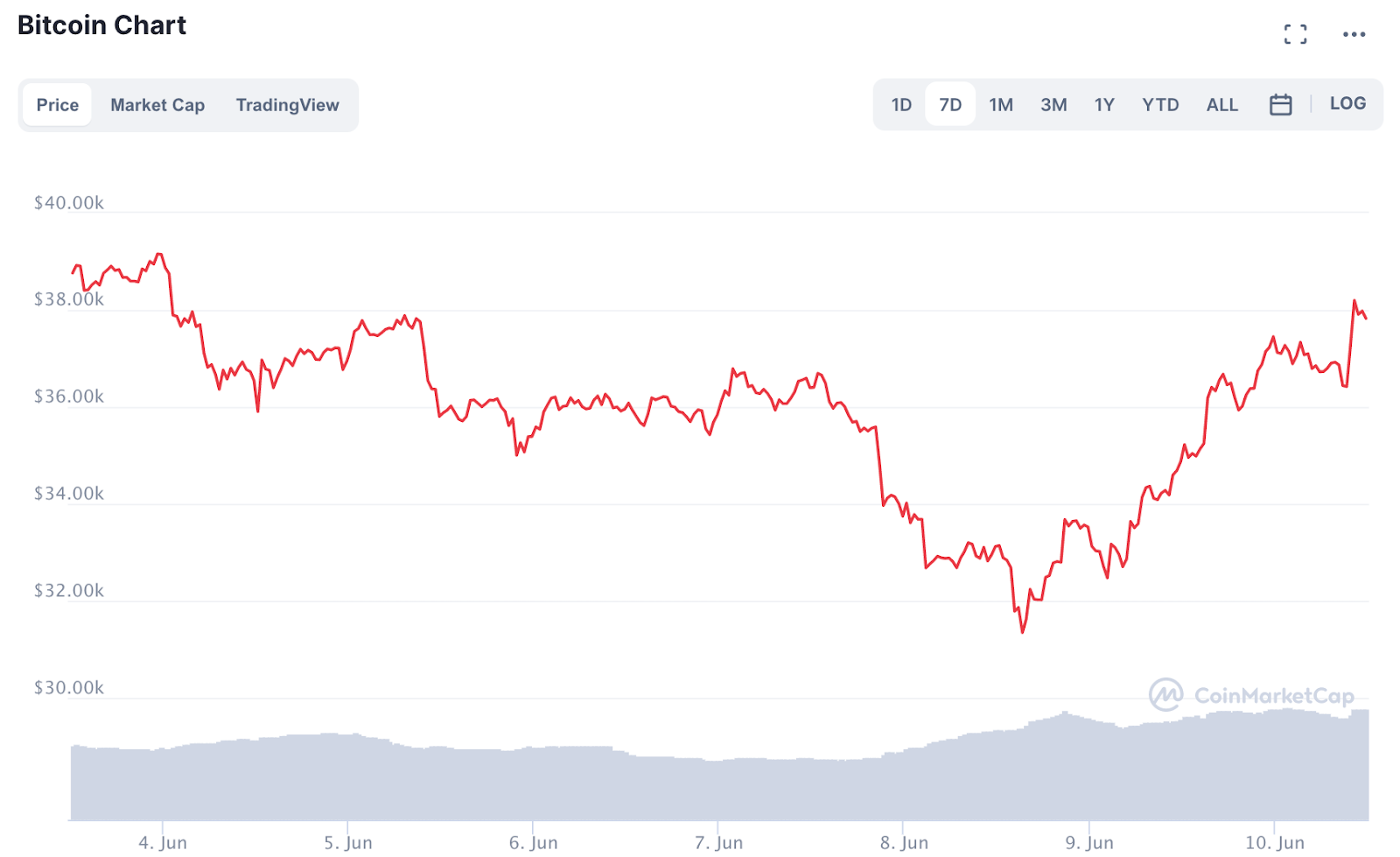
Prior to the approval, the news had barely any impact on Bitcoin’s price. In fact, Bitcoin crashed all the way to $31,000 on Tuesday — with Bloomberg pointing to a Bitcoin ransom recovered by the U.S. government as a potential culprit.
Though it is still unclear the method the U.S. government used to recoup the Bitcoin paid in the ransom, they must have managed to access the hacker’s private keys, which spooked buying interest. More information on this is expected to arise in the following days to clarify the process and its potential implications on Bitcoin.
Regardless, sentiment shifted quite quickly after El Salvador approved the Bitcoin Law, making them the first country to accept Bitcoin as legal tender.
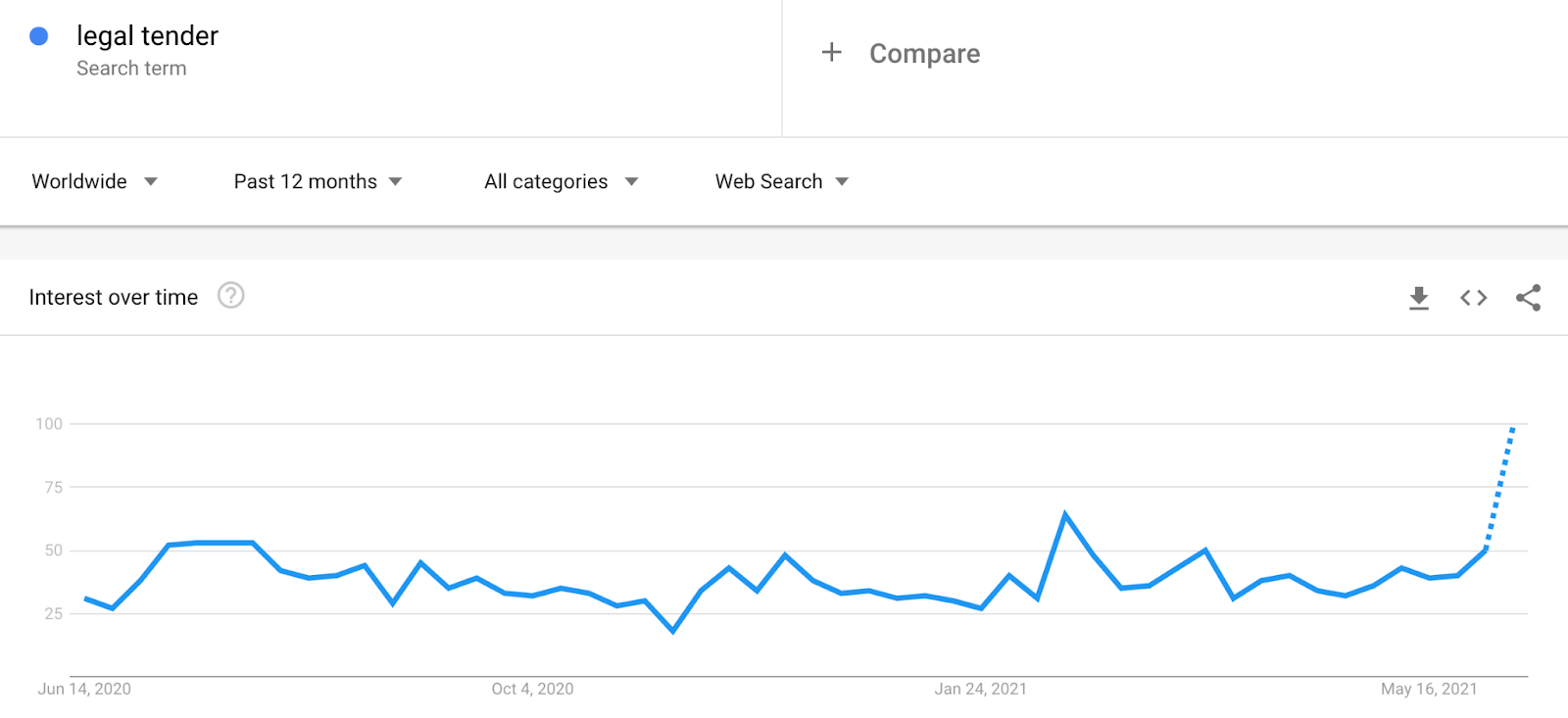
Wondering what exactly it means to be considered “legal tender”? You are not alone.
In short, Bitcoin being legal tender in El Salvador means that any business in the Central American nation has to accept it as a payment by law. In a Twitter spaces, El Salvador’s president Nayib Bukele clarified that they would go through a transitional period and help merchants accept Bitcoin payments in areas with unstable internet or lack of electronic devices.
Moreover, president Bukele announced that their government would be developing a Bitcoin wallet along with the company Strike. However, he also clarified that Salvadorans will be free to use whichever wallet they prefer, embracing Bitcoin’s open approach.
El Salvador’s development bank will also be setting up a trust fund that will buy people’s Bitcoin if they decide to sell it for dollars. This allows Salvadorans to be able to choose to opt out of Bitcoin’s volatility with their government taking the risk (and potential returns) of buying their Bitcoin.
The approval of the Bitcoin Law has generated a domino effect amidst Latin American politicians.
The recent enthusiasm in Bitcoin in Latin America has the potential to be a catalyst for future growth. While El Salvador is a small country, they are already seeing very high interest from crypto-related entrepreneurs looking to move there — with some exploring ideas as wild as mining Bitcoin with volcano-powered geothermal clean energy — likely to have an economic impact in the country.
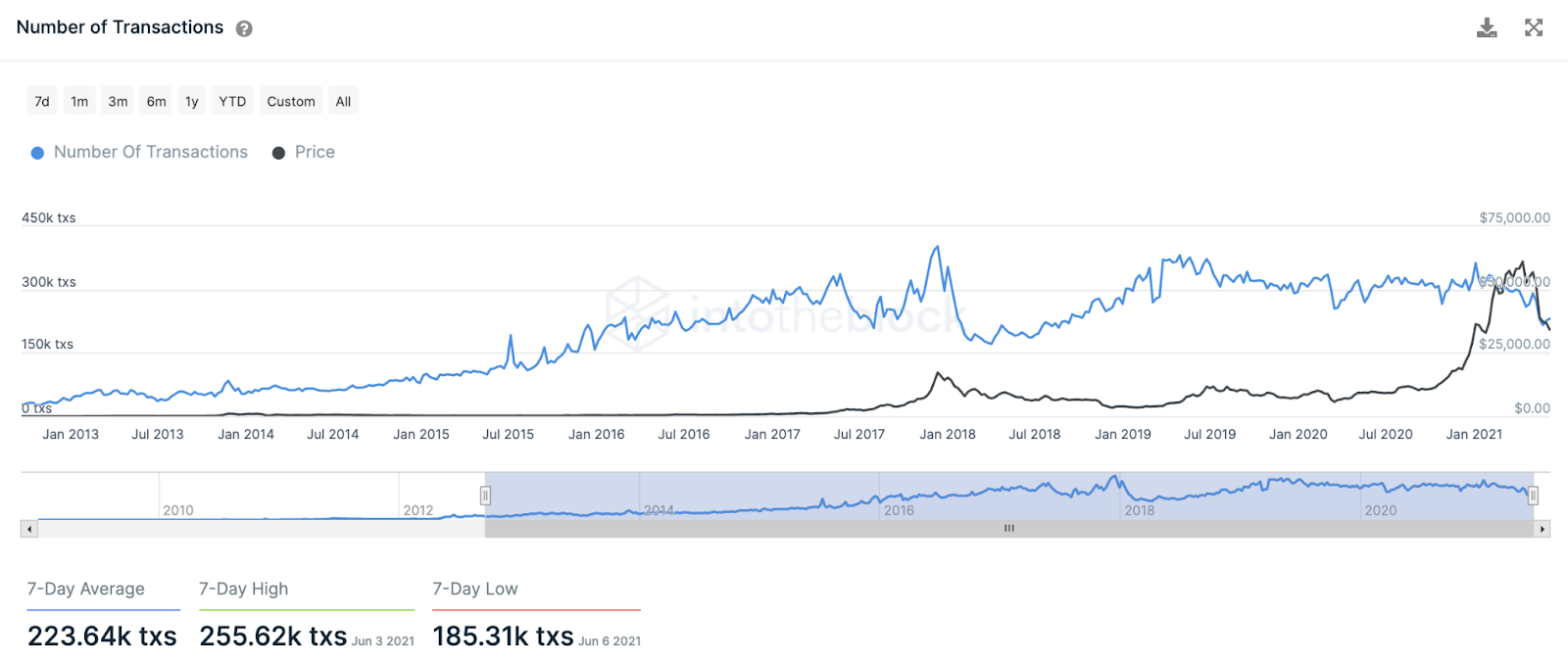
This attraction of capital and labor creates incentives for other countries to adopt Bitcoin and crypto broadly. In turn, this should increase activity on the Bitcoin blockchain and lightning network. This comes at a critical time as transaction activity has dropped steeply to levels not seen since 2018.
Over the next 90 days, El Salvador will go through the transitory process implementing Bitcoin as legal tender. While it’s still unclear the degree of transaction activity in the country that will take place in Bitcoin, it is likely to expedite remittances which make up for over 20% of the economy.
A community known as “Bitcoin Beach” in El Zonte, El Salvador had already adopted Bitcoin as a medium of exchange and based on the Salvadoran’s president played a key role in showing the potential for Bitcoin in the country. Through this program they educated people on Bitcoin and facilitated the use of the lightning network.
Overall, this education is likely to encourage greater adoption of Bitcoin as similar programs get implemented on a national level. Throughout the coming years (months?) it will be seen if more Latin American countries end up following suit and implementing their own Bitcoin laws. Ultimately this marks a milestone as countries open up to crypto and decentralized innovation.
This article contains links to third-party websites or other content for information purposes only (“Third-Party Sites”). The Third-Party Sites are not under the control of CoinMarketCap, and CoinMarketCap is not responsible for the content of any Third-Party Site, including without limitation any link contained in a Third-Party Site, or any changes or updates to a Third-Party Site. CoinMarketCap is providing these links to you only as a convenience, and the inclusion of any link does not imply endorsement, approval or recommendation by CoinMarketCap of the site or any association with its operators. This article is intended to be used and must be used for informational purposes only. It is important to do your own research and analysis before making any material decisions related to any of the products or services described. This article is not intended as, and shall not be construed as, financial advice. The views and opinions expressed in this article are the author’s [company’s] own and do not necessarily reflect those of CoinMarketCap.