Powered By Blogger

Friday, 2 July 2021

Enjin’s NFT Marketplace Efinity Rakes In $20 Million From EFI Token Sale on CoinList


Enjin successfully auctioned all tokens available for sale for the new Efinity NFT marketplace it has developed for the Polkadot ecosystem.

Latest Sale Brings Total Marketplace Funding to $38.9 Million

Given the concerns about Ethereum’s high costs and sluggish transaction throughput, competition amongst NFT marketplaces is heating up fast. More platforms are launching daily to keep up with demand and new use cases for NFTs.

As more blockchains compete for the torrent of demand for non-fungible tokens, Enjin has become the latest to launch another marketplace. Enjin, the team behind the ERC-1155 standard, has concluded a $20 million public sale of EFI tokens on CoinList for its next-generation Efinity blockchain. The oversubscribed sale ran for just 2.5 hours, and added to the already garnered $18.9 million from an earlier sale.

Efinity aims to tackle Ethereum’s many pain points, namely high gas fees and low throughput by constructing a blockchain marketplace capable of handling 1,000 transactions per second with six-second transaction confirmation. Built on Substrate, Efinity plans to leverage Polkadot’s interoperability for handling transactions in fungible and non-fungible tokens from Polkadot, Kusama, Ethereum, JumpNet, and nearly any other chain.

The multifunctional EFI token will play multiple roles within the ecosystem, including governance, staking, rewards, and paying transaction fees. It can also be applied to Enjin’s JumpNet, a gas-free blockchain, to increase transaction limits. It echoes other developments that Enjin has pioneered, like the ERC-1155 standard.

Unlike the standard ERC-721 non-fungible token (NFT) used to represent the original version of a piece of art, music, or video, the ERC-1155 standard can be both a fungible and non-fungible token simultaneously and is applied to more commoditized products, like popular in-game items that are collected, won, or traded.

A Race to Marketplace

Efinity is far from the only new blockchain marketplace to make its debut as other competing platforms enter the race to become NFTs’ winner-takes-all destination. Binance recently unveiled its own Binance NFT Marketplace late in June, Stellar blockchain hosts StellarNFT, and Solana features Sollectify. Tezos is now home to Hit Et Nunc and even Rarible has expanded to the Flow Blockchain after raising fresh capital.

These are in addition to the dozens of existing marketplaces that cater to different niches within the NFT space and the others that will arise as new use cases for NFTs emerge over time. However, given the vast incentives within the marketplace model, a fight for market share could unfold as new, more scalable, low-cost frameworks enter the ecosystem.

What do you think of the new Efinity NFT marketplace? Let us know in the comments section below.

Australian Regulator Seeks Advice on Crypto-Related Assets


The Australian Securities and Investments Commission (ASIC) recently opened a consultation for establishing methods and best practices for regulating crypto assets. The consultation paper seeks guidance on which crypto-assets should qualify as underlying assets, and how to make this determination. The proposal could signal the emergence of new crypto-based products in the Australian market.

Australian Regulator Seeks Advice

The Australian Securities regulator issued a public consultation paper to decide how to regulate cryptocurrency-based products. The paper, titled “ASIC consults on crypto-asset-based ETPs and other investment products,” seeks advice on several key subjects that could affect the issuance of cryptocurrency-based derivatives, such as ETPs.

To ASIC, cryptocurrencies are special assets whose impact needs to be regulated with tighter standards. In the paper, ASIC states they are:

Aware of interest in, and demand for, domestic cryptoasset ETPs. However, we are also aware of the real risk of harm to consumers and markets if these products are not developed and operated properly.

The paper recognizes several kinds of crypto assets, stressing not all cryptocurrencies qualify as underlying assets. However, the ASIC proposes a series of conditions a crypto asset must fulfill to be an underlying asset: a high level of institutional support, the availability of service providers to support ETPs providing exposure to the crypto-asset, a mature spot market, a regulated futures market, and the availability of robust and transparent pricing mechanisms.

Australia Could Follow Canada and Brazil’s Lead

With this consultation, the Australian government signals its openness to provide regulations adjusted to the reality of the market. Many think this is a very different proposition, compared to what governments like China are doing. China is orchestrating a total cryptocurrency crackdown by ousting exchanges and mining operations from its territory.

However, Australia seems more neutral when it comes to crypto. Financial Services Minister Jane Hume declared in May that Australians were free to invest in these assets while complying with existing regulations. She stated:

We take no issue with consumers investing in cryptocurrencies. But like investment in any asset class, they are subject to Australian law, including our market conduct, know-your-client, and tax laws. It is not a free pass.

In conclusion, the goal is for investors to finally have a cryptocurrency-based ETF available in the country. As a result, the task of retail and institutional investors wanting to get exposure to cryptocurrencies would be simplified. Australia could follow countries like Brazil and Canada, that already have crypto ETF products by way of issuing crypto-friendly regulatory frameworks.

What do you think about the latest consultation paper issued by the ASIC? Tell us in the comments section below.

Unicly to Leverage Sushi’s Miso Auction Tools to Deepen Fractional NFT Liquidity


As Unicly advances NFT combination, fractionalization, and trading, an integration with Sushiswap’s auction platform is designed to promote better pricing conditions for utoken creators and buyers.

Collaboration Designed to Improve NFT Price Discovery Process

Despite the cooling hype surrounding NFTs, there has been no shortage of innovation in the space as non-fungible token projects explore other use cases. Echoing the fractionalization that blockchain technology champions in other areas, up-and-coming projects are embracing similar methodologies in the NFT arena.

Fractionalization of NFTs effectively means splitting a single NFT, or a collection of NFTs, into smaller, fractional pieces that can be bought and sold in primary and secondary market transactions. Instead of users having to spend enormous sums on a single NFT, this solution gives investors a practical way to gain exposure and fractional ownership of the work or collection of works.

Unicly, a permissionless protocol, is designed to assist NFT holders with combining NFT collections, fractionalizing collections through the minting of utokens, and facilitating token offerings through its automated market maker platform (a type of decentralized exchange or dex). At present, the protocol features more than $65 million worth of NFTs from different collections.

One of the challenges the project has run into is that the holder of the NFT(s) minting utokens must go ahead and provide all the capital in the form of liquidity to market the tokens, thereby taking on all the risk directly. The decision to embrace Sushi’s MISO auction methodology is designed to alleviate some of these pressures on sellers.

Miso, a tool in the Sushiswap stack, can be considered a launchpad, which effectively follows a model similar to an IPO in traditional financial markets or an initial dex offering (IDO) in crypto markets. Besides giving Unicly users a path to monetize their holdings by raising the capital needed to provide liquidity for secondary trading in fractionalized NFTs, this methodology can also allow better price discovery.

Illiquidity in tokens can pose a significant problem. Without enough liquidity, market function can create pricing pressures that hurt end-buyers by raising costs and preventing more widespread participation in offerings or secondary market transactions. With Sushi’s technology combined with Unicly’s methodology, fractional NFT sellers and buyers can in theory each practically benefit from the added liquidity of the solution.

In the future, the partnership might also benefit Sushi’s forthcoming NFT platform titled Shoyu. In the meantime, the tie-up can power dual-listings of fractionalized NFTs while improving incentives for liquidity providers and elevating price discovery in traditionally thin markets.

Fractionalization Hurdles Still Remain

While fractionalization can help individuals diversify their funds into areas like fine art, which were traditionally off-limits for retail traders and investors, this process is not without its drawbacks. One of the key points critics have jumped on is the rights issue.

When a buyer purchases a fractional piece of an NFT, the question of what rights they are entitled to as owners remains. Because this is still a young and relatively undefined area, fractionalization can be very opaque given the limited public information available from each token.

These efforts have also raised legal considerations, especially from the SEC, which might characterize them as a security or investable product, thereby requiring more documentation and legwork related to offerings.

The other question relates to the safety and technical soundness of splitting these NFTs, and the ability to recombine them later. Unfortunately, problems in both these areas have unfolded in the past, making it especially important for companies in the fractionalization space to address the issues and explain how their technologies overcome these pitfalls.

Will fractionalization of NFTs push you to purchase your first NFT? Let us know in the comments section below.

Create Your Own DAO Easily With xDAO - the Innovative DeFi Platform Powered by BSC


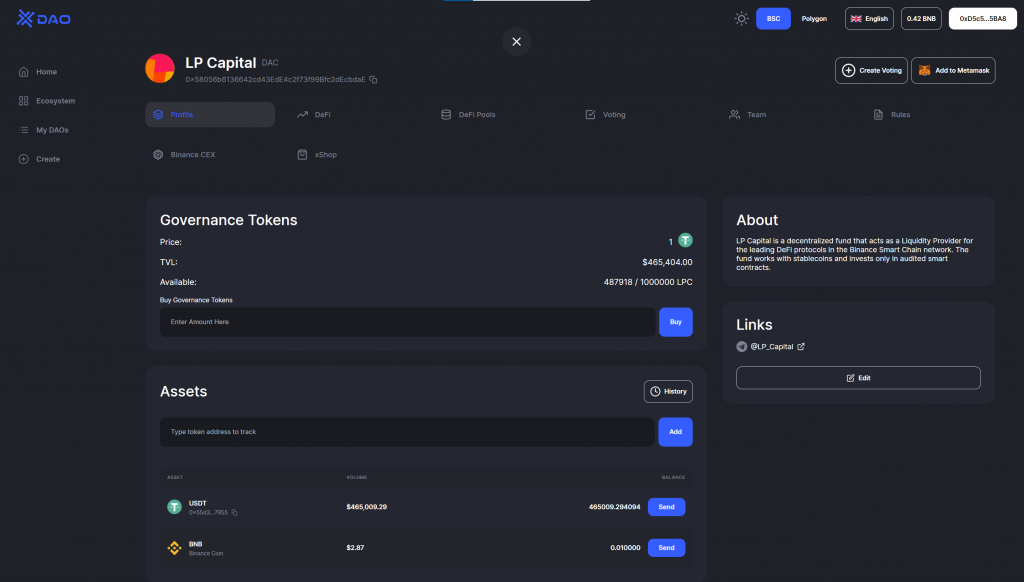
xDAO is an innovative DeFi platform which allows anyone to easily create Decentralized Autonomous Organizations – DAOs – for the joint management of crypto assets. The platform is powered by BSC, ensuring low transaction costs, high reliability and sufficient speed.

An Easy Way to Create Your Own Decentralized Autonomous Organization

Launched in April 2021, xDAO is the first and the only DAO-builder on the Binance Smart Chain (BSC). The protocol allows users to combine crypto assets from multiple partners and manage them in more efficient and secure way by using auto-generated smart contracts. A clear voting system also allows users to make collective decisions and be confident in their exact execution.

xDAO offers a perfect solution to anyone who wants to easily pool resources to mange crypto assets as a DAO. The need for the service is virtually endless and includes potential users such as venture capital funds, public funds and foundations, new tech startups and freelance groups. The holders of governance tokens of a DAO created on the platform will be able to jointly manage the organization’s finances; store various coins and tokens (including NFTs); determine the procedure for onboarding new members; establish rules for the minting and burning of tokens and interact directly with other DeFi protocols.

By utilizing the BSC blockchain, xDAO offers several major advantages to potential DAO creators such as avoiding affordability and performance issues. Demonstrating the community support for such a service, xDAO has won a Binance Smart Chain Hackathon in April for the development of the project.

In May, xDAO passed a security audit by Pessimistic. Now the development team is working constantly on upgrading the user experience on the platform. Next they are preparing for the announcement of the native token ($XDAO) and get started with the development of the second version on multi-chain (including Ethereum, BSC, Polygon and Solana). V2 is planned to be be ready by Q4 2021 and will also see the launch of the Open Source Web 3.0 extension (like MetaMask) to interact with all DeFi protocols.

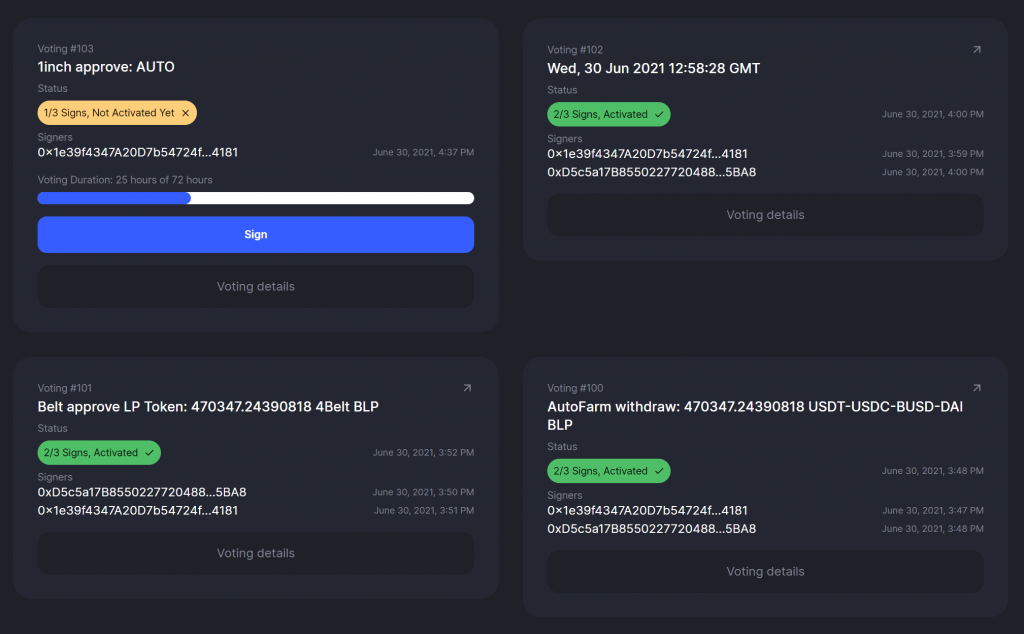
xDAO is already fully integrated with top DeFi protocols on BSC such as 1inch:

To learn more about the platform visit app.xdao.app, follow developments and join the community on TwitterInstagramMediumYouTubeDiscord and Telegram.


This is a sponsored post. Learn how to reach our audience here. Read disclaimer below.

Softbank Invests $200 Million in Brazilian Crypto Trading Platform Mercado Bitcoin


The multinational conglomerate holding company headquartered in Tokyo, Softbank operates a Latin America Fund that invests in startups focused on identification technology, e-commerce, education, fintech and now cryptocurrency solutions. The Softbank Latin America Fund revealed on Thursday that it invested $200 million in the crypto-asset exchange Mercado Bitcoin.

Mercado Bitcoin’s $200M Capital Raise: Softbank Funds One of the largest Series B funding rounds in LATM

The Softbank Latin America Fund has invested in Mercado Bitcoin’s parent company 2TM Group. The announcement highlights that it is one of the largest Series B funding rounds in Latin America and Softbank’s largest crypto investment in the Latin American continent. The investment brings 2TM Group’s unicorn status to $2.1 billion and the eighth-most valuable fintech firm in Latin America.

Mercado Bitcoin aims to leverage the financing to continue scaling operations and invest in more infrastructure. The company’s announcement emphasizes that over the last 12 months, Mercado Bitcoin has gathered 2.8 million clients. “Between January and May 2021, approximately 700,000 new customers signed up to use Mercado Bitcoin’s services,” the company’s announcement detailed. Additionally, Mercado Bitcoin’s trade volume in 2021 has seen massive growth as well “surpassing the total for its first seven years combined.”

“Mercado Bitcoin has become a global leader in the cryptocurrency space. We’ve been impressed by 2TM Group’s understanding of the Brazilian ecosystem, as well as their contribution to the evolving regulatory framework in Brazil,” Marcelo Claure, CEO of Softbank Group International and COO of Softbank Group said in a statement. The Softbank executive further added:

Cryptocurrencies have incredible potential in Latin America. We believe winning in Brazil is critical for 2TM Group and are excited to take part in this incredible journey.

Softbank Group and the Conglomerate’s Portfolio Companies Have Vested Interest in Fintech and Blockchain

Fintech companies and crypto solutions have gathered mainstream attention in Latin America and the first Bitcoin exchange-traded fund (ETF) in Latin America made its debut on the Brazil Stock Exchange last week. Softbank Group and the firm’s Latin America Fund have been growing portfolio companies based on these trends. The Softbank Latin America Fund also backs fintech firms such as Creditas, Cortex, Inter, Loggi, Konfio, and Ualá.

The multinational conglomerate Softbank has been into crypto and blockchain technology for quite some time. In October of 2019, Softbank announced it was working with Tbcasoft, and IBM on a cross-carrier blockchain technology project. Softbank also worked with Tbcasoft when the firms created a blockchain-based “Identification & Authentication” Working Group the same year.

One of the Tokyo-based company’s portfolio firms is also leveraging crypto-asset solutions. Just recently, in mid-April 2021, the Softbank-backed global space provider Wework recently revealed it was accepting cryptos and keeping digital assets on its balance sheet.

Mercado Bitcoin’s financing from Softbank follows the company’s Series A round in January 2021, which was co-led by Parallax Ventures and G2D/GP Investments. Mercado Bitcoin aims to use the funding to “accelerate growth across 2TM Group’s portfolio.” 2TM Group’s portfolio also includes the crypto wallet provider Meubank and it hopes to launch a fund called the “Bitrust” in the near future.

What do you think about Softbank funding 2TM Group and its subsidiary Mercado Bitcoin with $200 million in financing? Let us know what you think about this subject in the comments section below.