Powered By Blogger

Thursday, 8 July 2021

Musée - the User Owned NFT Marketplace and Gallery


2021 continues to bear witness to the continual rise in non-fungible token (NFT) prevalence and innovation. Following on from 2020 – where the NFT market was claimed to have tripled in total transaction value – NFT sales in just the first quarter of 2021 reached over a whopping $2 billion.

As the NFT market foundations progressively become cemented in place, it becomes apparent that the high of money-making can only go so far – there is a growing necessity to focus on the sentimental side of NFT ownership, with the space steadily hungering for growth and is now developing the need for something next level.

Musée: Digital Real Estate for Creators and Collectors

Musée is an NFT-owned marketplace platform built upon a finite number of digital plots, where owning a plot allows users to sell and share their creations or NFTs from their collections directly on the grid. All plots are visible from the homepage as soon as users land on the platform and anyone can purchase as many plots as they like, and even interact with other users’ content.
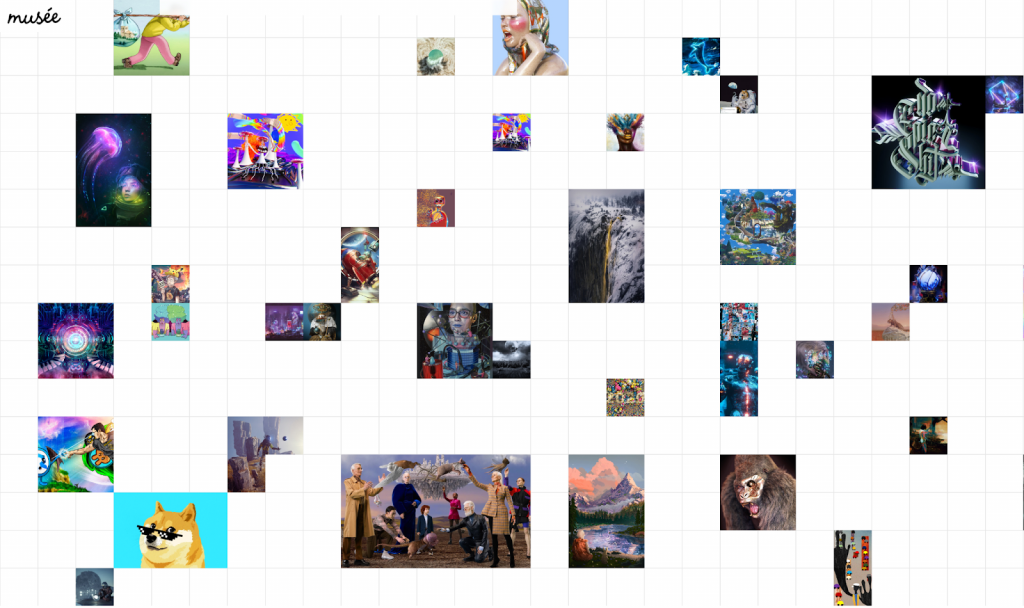
When landing on the homepage, the first thing users see are any available empty digital plots, and the NFTs already occupying purchased plots. This ensures the allocated plots are the first and foremost visuals visitors see; ensuring maximum exposure for all forms of NFT artwork on all digital plots. Visitors will have the ability to enjoy a full screen exploration mode as they discoverer the available NFTs for sale from the plot owners.

Using the Ethereum blockchain ERC-721 tokens, interested individuals/parties can purchase, own, combine, and sell NFTs that have full ownership of the plots. Pioneering the digital art-NFT space, Musée develops the first ever marketplace/museum fusion via blockchain to secure Proof-of-Ownership (PoO), and control of the space. Musée believes that the artworks and collectibles of the modern digital era can be anything from a digital Mona Lisa, to a simple Tweet.
Musée provides all users with a place to congregate and come together to express, find joy, sell their art, and become part of a like-minded, positive community. As users purchase plots and portray their NFT imagery to the world, they steadily fuel the future of the blockchain art revolution. As part of Musée’s evolution, it will become a complete social platform where plot owners can engage with their followers.By broadcasting art openly and ensuring it remains the focal point of the platform, Musée’s homepage reinforces the importance of art and expression. Enabling people from all walks of life to celebrate art socially and display their most coveted NFTs openly, the innovation Musée presents will change the way in which people interact with art forever.

Musée’s future plans are to be the leading museum of the virtual worlds, the metaverse – the Louvre Museum of the digital era. The owners of the first 10,000 plots have the chance to own a part of history.

Musée Features

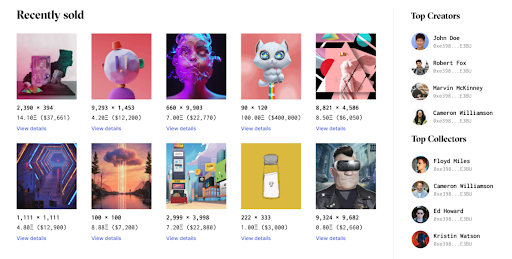
As aforementioned, the moment users land on the homepage, the digital plots are the first thing they see. Each recently sold and listed digital plot comes with their plot size dimensions, the price in ETH (and USD), and a “View details” link to direct interested parties to the plot. Just like physical real estate, plot owners will have the opportunity to increase the value of their land in many ways. As users gain followers, so does their plot(s), increasing its resale value. In the future, plot owners will be able to invite guest artists to participate within their plots for limited drops.

The platform’s main focus is the grid containing all the plots. It is the milliondollarhomepage of the NFT era. But unlike the milliondollarhomepage, Musée will remain a living and evolving page due to the power of NFTs.
Functioning as a social platform and cornerstone for NFT art, Musée truly revitalizes the world of art, museums, and NFTs. Reinventing the way people cherish and view NFT art, Musée bolsters NFT value, creates a space for culture, and identity; all while providing an entity that truly belongs to the community. In a world where physical institutions are becoming increasingly scarce and difficult to visit, Musée breathes life into a platform that facilitates expression, and connection; globally.

Musée Plot Sale and Launch – 20th July, 2021

But all this would not be possible without first making the plots available for purchase – and it is with excitement that Musée are gearing up for their launch day. Pegged for July 20th at 9AM EST, Musée will make all plots available for sale at 0.5ETH per plot, giving users a way to cherish their digital art and collectibles forever.

Having explored its many features and pioneering direction, Musée’s game-changing potential is clear. Musée offers a social platform that not only connects people but also allows them to build upon a museum-like digital plot that could display their art forever. Add in the option to sell that NFT and/or plot and it is easy to find an option for prosperity and expression not openly available anywhere else.

That which has been limited to physicality and centric ownership for an era is now transitioning to the boundless planes of the internet. A place where creators and contributors alike have the opportunity to seize ownership of what they love.


Wednesday, 7 July 2021

As Miners Leave Bitcoin in Droves, Space Allocation Dedicated to Filecoin and Chia Surges


While a large quantity of hashrate has stopped dedicating resources to the Bitcoin network, a great number of alternative mining ecosystems are swelling with new participants. China’s ASIC exodus has ignited a significant increase in demand for accessing storage power on both Filecoin and Chia’s proof-of-storage networks. Both networks have seen space allocation spike significantly since the bitcoin mining crackdown in China.

Alternative Consensus Algorithms Reap Benefits of the SHA256 Hashrate Drop

A lot has been happening in the cryptocurrency mining space recently, as the industry is seeing a massive shift since the start of the bitcoin mining crackdown in various Chinese provinces. SHA256 hashrate dedicated to the Bitcoin (BTC) network has plummeted over the last few weeks and the hashrate drop caused the network’s mining difficulty to dip close to 28% this past weekend. Interestingly, this was the largest epoch mining difficulty drop BTC has ever experienced and in two weeks it may be even larger.

At press time, according to coinwarz.com’s hashrate chart set for a one-month interval, BTC’s hashrate is 87,660,572,446,369,430,000 hashes per second or 87 exahash per second (EH/s). The mining difficulty drop made it easier and more profitable to mine BTC but alternative crypto assets that leverage different consensus algorithms have been far more profitable. Today’s most profitable consensus algorithm is Blake256R14 which can mine the crypto asset decred (DCR).

As Miners Leave Bitcoin in Droves, Space Allocation Dedicated to Filecoin and Chia Surges
Today’s most profitable mineable coins leverage consensus algorithms like Ethash and Blake256R14.

A machine that boasts more than 52 terahash per second (TH/s) — and pulls 2,200 watts off the wall with an electricity consumption rate of $0.12 per kilowatt-hour (kWh) — can see profits of up to $116 per day using DCR exchange rates on July 5. A machine that can mine the Ethash algorithm and coins like ETHETC, CLO, PIRL, and UBQ can get roughly $42 per day using today’s crypto exchange rates, the same electrical consumption with 750 megahash per second (MH/s), and 1,350 watts of power.

Chia and Filecoin Networks Benefit From the ASIC Exodus

These specific consensus algorithms have seen an increase since the SHA256 exodus, but in comparison to times prior to China’s crackdown, these networks also lost a considerable amount of hash during the shift as well. Two notable crypto networks, however, saw the opposite effect as space allocations dedicated to the Chia network and Filecoin network have grown exponentially. In mid-October, Bitcoin.com News reported on Filecoin’s miner strike which saw a standoff between members of the Filecoin mining community.

As Miners Leave Bitcoin in Droves, Space Allocation Dedicated to Filecoin and Chia Surges
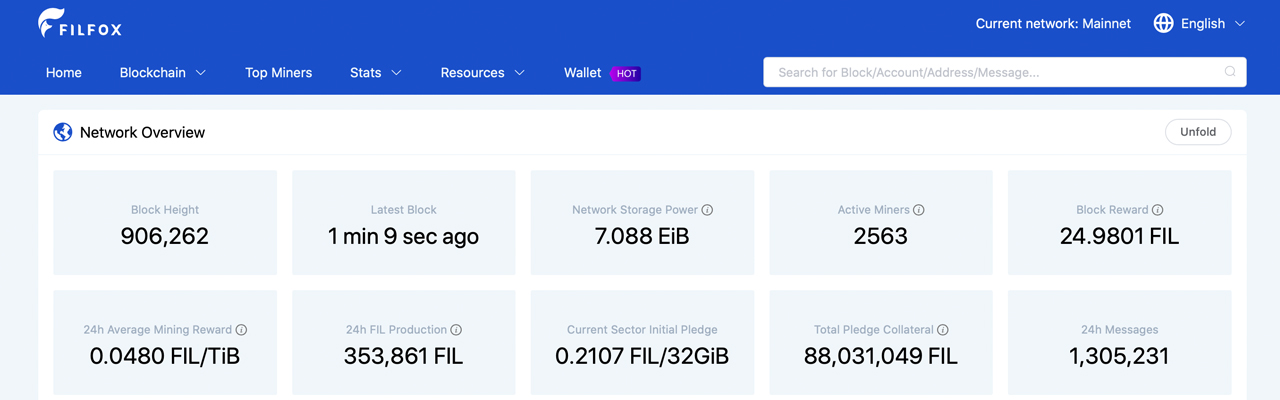
Filecoin’s 7.087 exbibytes (EiB) of effective storage on July 5, 2021.

At that time, Filecoin’s “Network Storage Power” according to filfox.info was 600 pebibyte (PiB) of effective storage. When the first warnings of a miner crackdown in China came out of Inner Mongolia back in March and went viral, Filecoin’s effective storage rate skyrocketed. The effective storage rate climbed higher and higher as each week passed, as today’s rate is 7.087 exbibyte (EiB). he network crossed a milestone of 1 EiB on November 24, 2020. The network crossed a milestone of 1 EiB on November 24, 2020, then a great majority of the effective storage increase stemmed from Q2 2021.

As Miners Leave Bitcoin in Droves, Space Allocation Dedicated to Filecoin and Chia Surges
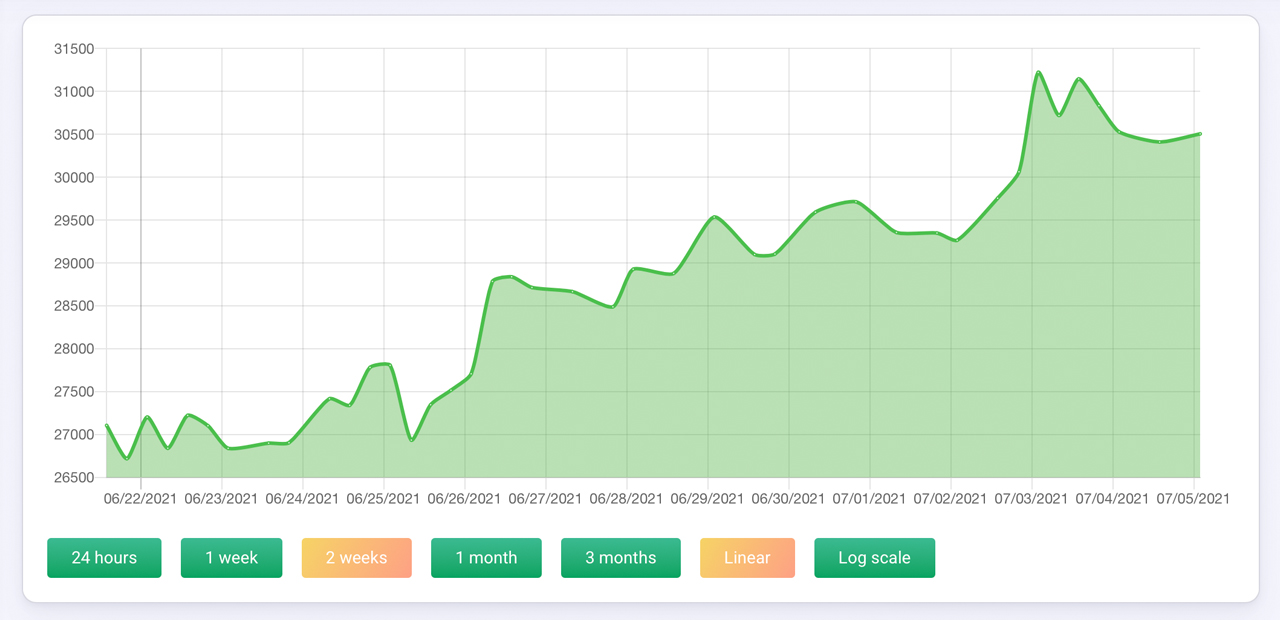
Chia’s 30,505 PiB of allocated storage on July 5, 2021.

The crypto asset network Chia has also seen the space allocated to the Chia network grow exponentially and after the Sichuan crackdown, it spiked considerably higher than usual. Chia network statistics show 30,505 PiB of allocated storage dedicated to the chain on July 5. It was only 26,718 PiB on June 22, which shows it has increased 14.17% since the start of the Sichuan mining crackdown that week. The Chinese journalist Colin ‘Wu’ Blockchain tweeted about the demand that Chia and Filecoin mining was seeing on June 20 and since then space allocated to both networks has increased a great deal.

“The computing power of Chia and Filecoin in China has not been affected,” the regional reporter noted that day. “[The] Chinese government mainly controls the power sector to crack down bitcoin mining, but they consume less electricity. Their computing power is continuing to rise, and some bitcoin miners may switch to them,” he added.

What do you think about the other consensus algorithms besides Bitcoin’s SHA256 seeing more demand these days? What do you think about the exponential increase in space allocated to Chia and Filecoin’s networks? Let us know what you think in the comments section below.

Nigerian Twitter Suspension Has Unintended Effects on Country's Crypto Community


On the surface, it looks like Nigeria’s suspension of Twitter operations on June 4 may have been triggered by the microblogging company’s decision to take down a controversial tweet — from President Mohammed Buhari. However, as some observers have noted, the removal of the tweet may have presented the Nigerian government with the perfect excuse for targeting Twitter CEO, Jack Dorsey.

Nigeria’s Anti-Tech Policies

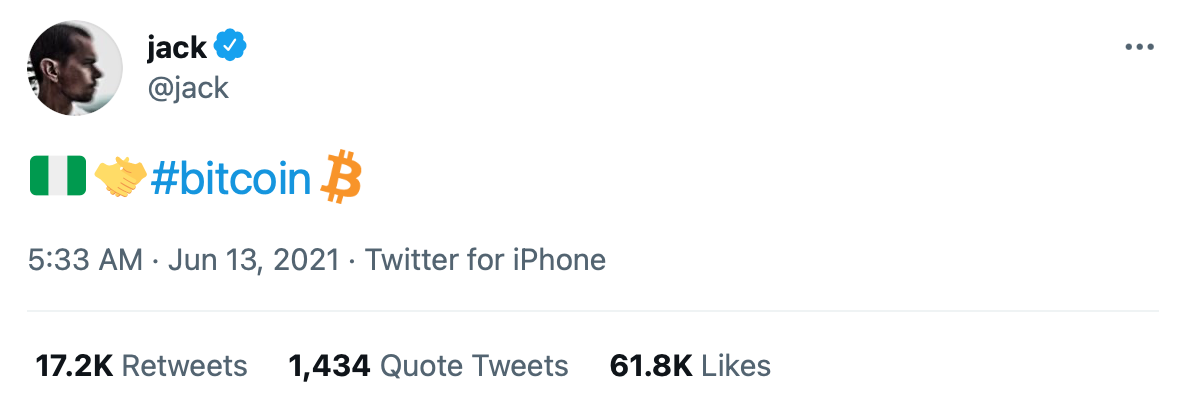
As widely reported, social media mogul Dorsey tweeted his support and endorsement of the EndSars protests back in October 2020. In a tweet that enraged Nigerian officials, Dorsey asked his followers to donate bitcoin to organizers of the protest after the movement’s bank accounts were frozen. Also, in addition to supporting the protests, the CEO recently tweeted and shared articles that call on Nigerian authorities to pursue what he calls the “bitcoin standard.”

Therefore, when Twitter deleted the President’s tweet after alleging that it had violated its policies, this proved to be the final straw. The Nigerian government responded to the tweet’s removal by suspending the company’s operations and by threatening to arrest Twitter users that defied an order to stop using the platform. While this decision has been condemned by many including the U.S. government, President Buhari’s administration remains undeterred.

Still, others are viewing Twitter’s suspension as a continuation of Nigeria’s anti-tech policies that appear to have started with the targeting of the crypto industry. Starting on February 6, 2021, Nigerian financial institutions have been adhering to a Central Bank of Nigeria (CBN) directive that requires them to stop extending their services to businesses or individuals that deal with cryptocurrencies.

De Facto Home to the Crypto Community

As a result of this directive, players in Nigeria’s crypto industry have had to resort to platforms that cannot be censored by the government. However, unlike the CBN directive, the suspension of Twitter in Nigeria appears to have indirectly created an even bigger challenge for the country’s crypto industry. As one Nigerian media outlet explained, Twitter has acted as “the voice of the crypto world and has been recognized as the de facto home of the crypto community.” The outlet warns that with Twitter now blocked, Nigerian crypto enthusiasts can no longer “get insights and perspective from some of the greatest minds in the crypto space.”

This view is shared by Adedayo Adebajo, who is the managing director of Jerulida Africa DLT. In response to inquiry sent by Bitcoin.com News, Adebajo said:

Most crypto influencers and news are obtained and spread on Twitter. The social media platform is the best source for one to get real-time updates on market trends. The Twitter ban has for example affected all businesses including blockchain and crypto-related enterprises who carry out their outreach and marketing using Twitter.

When the CBN directed financial institutions to stop offering their services to crypto entities earlier in the year, crypto exchanges and traders responded by moving their business to P2P platforms. As previously confirmed in a report by Bitcoin.com News, Nigeria’s P2P bitcoin volumes surged following the imposition of the CBN directive. Similarly, some Nigeria-based Twitter users have responded to the Twitter ban by installing virtual private network (VPN) applications on their mobile devices.

Use and Impact of VPNs

This growing use of VPNs by Twitter users in Nigeria has been confirmed by Nigeria-based crypto enthusiasts like Aniekan Fyneface, a Nigerian blockchain enthusiast and content developer. In his response to an inquiry from Bitcoin.com News, Fyneface notes that many Nigerians are still active on Twitter despite the suspension. Still, this use of VPNs has not had the desired results, according to Adebajo. He explained:

Yes, VPN still allows people to use Twitter, but a huge percentage of the population either don’t have the luxury of money, time or tech know-how on how to go about it, so they just stepped back. The Twitter ban is a huge blow in the heart of all businesses and crypto. Tweets are not getting as much engagement as before while many people are in the dark on the trends.

Meanwhile, Fynface tells Bitcoin.com News that the Twitter ban is unlikely to have a big impact on the industry. He insists that Nigerian crypto users will still find alternative ways of accessing information just like they have found ways of using their bank accounts to buy cryptocurrencies even after the CBN directive was issued.

Do you think the suspension of Twitter by Nigerian authorities is hindering the growth of the country’s crypto space? Tell us what you think in the comments section below.

4,000 Institutional Funds in Germany Can Now Invest 20% of Portfolios in Crypto Assets


Around 4,000 institutional funds with almost 2 trillion euros in assets under management in Germany can now invest 20% of their portfolios in cryptocurrency, including bitcoin.

  • The highly anticipated Fund Location Act (Fondsstandortgesetz) went into effect on July 1 in Germany. The German federal parliament, the Bundestag, cleared the legislation on April 22.
  • Under this law, new and existing domestic special funds (Spezialfonds) are permitted to invest up to 20% of their portfolios in crypto assets, like bitcoin.
  • There are approximately 4,000 such special funds covered by this legislation. According to a report by BVI Investments, 1.88 trillion euros ($2.23 trillion) were invested in open special funds, excluding special real estate funds, as of the end of December 2020.
  • If all special funds were to allocate the full 20% in cryptocurrency, it would equate to more than 376 billion euros ($446 billion).
  • Traditionally, special funds are open-ended, regulated investment funds limited to institutional investors, such as financial institutions, insurance companies, corporations, foundations, and churches.

What do you think about this law allowing special institutional funds to invest in cryptocurrency? Let us know in the comments section below.

Spanish Congress Passes Antifraud Law: Users Will Have to Disclose Crypto Holdings Inside and Outside Spain


The Spanish Congress has approved the antifraud law that was amended last month by the senate. Spanish citizens must now inform about their crypto holdings even outside the country. The new law further establishes severe fines for citizens who fail to share this information with authorities. A limit on how much money citizens can pay in cash for services has also been also established.

Antifraud Law Toughens Crypto Oversight

Spain finally approved its long-discussed antifraud law that establishes a series of controls on cryptocurrency and cash. The recently passed law includes two important resolutions and amendments proposed by the Senate. First, Spanish citizens now must inform about the cryptocurrencies they hold both inside and outside the country. Second, the law establishes limits on cash expenditures to better control capital movement.

The law, introduced in 2018 and filed until recent times, establishes harsh fines for citizens who fail to present their crypto holdings in time. The controversial ‘720 model’ will apply for the establishment of fine amounts, even though Spain faced criticism in the EU for implementing it back in 2015. Based on this model, citizens could pay fines of up to 150% if they fail to present reports within a designated period.

However, the EU is expected to present its resolution on the issue on July 15th, which could jeopardize the implementation of the new Spanish law.

Cash Transactions Also Regulated

These new limits for transactions with cash could change how citizens conduct business in Spain. Now, a limit of 1,000 euros will apply for services professionals provide. The law reduces this limit from 15,000 to 10,000 euros for individuals outside of Spain. However, the resolution has also been contested by the European Central Bank. In 2018, then president of the ECB, Mario Draghi, raised concerns about the potential negative effects of this measure and asked to stop it. The ECB stated:

This limitation makes it difficult to liquidate legitimate operations using cash as a means of payment, thus endangering the concept of legal tender.

The European Directive establishes the limit at 10,000 euros, ten times the number Spain has now approved. All of these measures were established to follow a clear objective: to toughen controls on tax and capital movements in the country. But this could force citizens to use digital payments to settle more transactions. Consequently, the law may also drive them to more alternative payment methods such as cryptocurrencies in the long run.

What do you think about the new antitrust law approved by the Spanish Congress? Tell us in the comments section below.